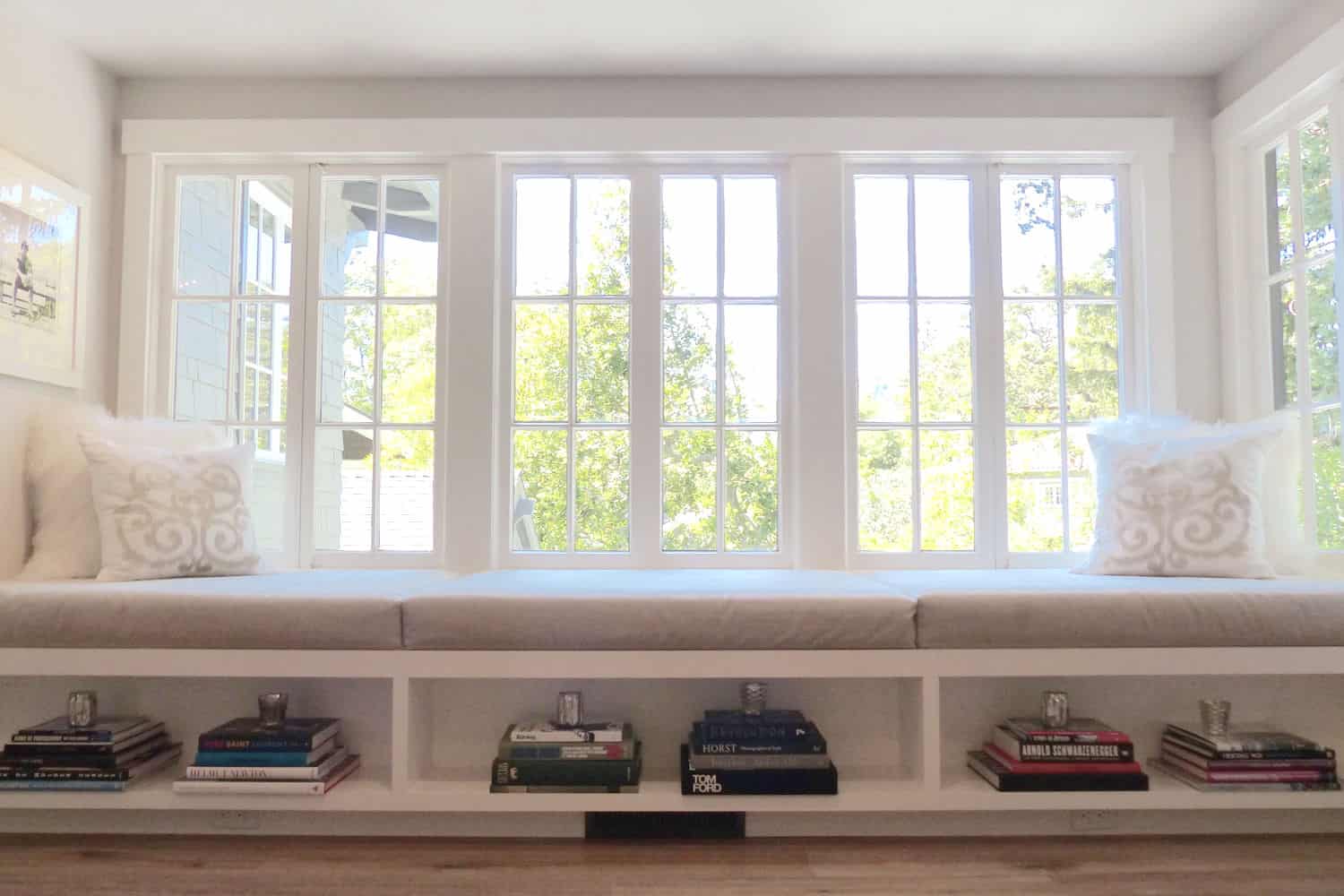
Buy custom-cut foam inserts that replace flat, worn-out sofa and couch cushions, made to fit your furniture exactly.
Start Here:
Select a Shape to Customize Your Cushion
Don’t see the shape you need? No problem. Just choose “Pattern Shape” to make your own pattern and send it to us to cut to your exact pattern specifications.
Over 100,000 Satisfied Residential and Commercial Customers, including:
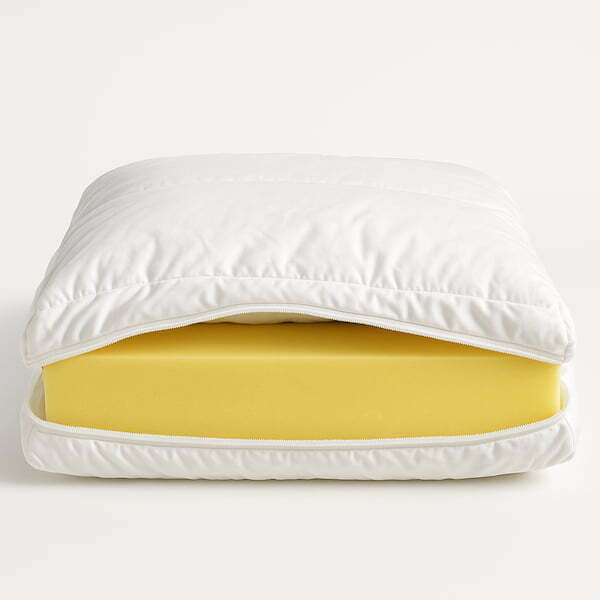
Couch cushions eventually wear out after years of dutiful use, but a made-to-order replacement will make them comfy and plush again. Every cushion is cut to your own measurements or pattern, so it fits your couch, sectional, chair, or ottoman exactly the way the original did. Rather than pulling a stock size off a shelf, FoamOrder builds each one to your specifications—seat or back, firmness, thickness, and finish.
“This is just night and day from the old couch that we had.”
What Butch ordered
FoamDuraFlex™ D40 & D30 Firm
Size5″ seats, 4.5″ backs
Set2 seats + 2 backs
Christine T Burnt Hills, NY
“I no longer avoid wanting to sit on the couch. I look forward to sitting on the couch.”
What Christine ordered
FoamEverFlex™ V44 Firm
Size23.5″ × 28″ × 5″
Set5 seats
Celia A Boulder, CO
“I was just very motivated to get new inserts & bring the couch back to life.”
What Celia ordered
FoamDuraFlex™ D40 Firm
Size34.5″ × 26″ × 6″
Set2 seats
John & Pam G Orlando, FL
“Brand new cushions in an old couch — this is exactly what we wanted.”
What John & Pam ordered
FoamDuraFlex™ D30 Medium
Size24″ × 24″ × 5″
Set3 seats
Ravleen K Medford, MA
“It literally feels like a brand new couch.”
What Ravleen ordered
FoamEverFlex™ V44 Firm
Size38″ × 29″ × 6″
Set2 seats
MP Salt Lake, UT
“It just feels like having new furniture again.”
What MP ordered
FoamEverFlex™ V44 Firm
Size83.5″ × 30″ × 3.5″ seat
Set1 seat + 3 down backs
Brad M Mililani, HI
“I don’t sink in. It has just the right amount of bounce, and I’m happy with it.”
What Brad ordered
FoamNatural latex, N36 Medium
Size4.5″ thick, L-shaped seat
Set1 L-seat + 3 seats
Kyle G Edmond, OK
“We’re very happy we’ve made this decision to go with FoamOrder.”
What Kyle ordered
FoamDuraFlex™ D40 Firm
Size24.5″ × 25.4″ × 5.5″
Set3 seats
Custom Sofa & Couch Cushion Features
A FoamOrder replacement couch cushion is cut to fit your sofa, not pulled from a stock size. Open any step below to see what you control on a sofa, loveseat, or sectional, from the foam core to how the seat cushions stay in place.
Choose the shape of each couch cushion, then enter its exact width, depth, and thickness. Most sofas mix a few shapes, so you can order the seat cushions, back cushions, and any corner pieces as separate items in the same foam and fabric.
Rectangles & squares — the standard seat and back cushion on most sofas, loveseats, and sleeper sofas.
T-cushions — straight or curved, for the end seats on sofas where the cushion extends in front of the arms.
Trapezoids & slanted trapezoids — for angled sofa ends, curved sofas, and tapered sectional pieces.
5-sided polygons — for the corner seat of an L-shaped sectional, where the cushion is clipped at the inside corner.
Wedges & bolsters — for tapered back cushions and long back bolsters on daybeds and tight-back sofas.
Custom pattern — for camelback, curved, or notched couch cushions. Choose "Pattern Shape," trace your old cushion, and send us the template.
Measure every cushion separately, even ones that look identical, since couch cushions can wear unevenly over the years. In the configurator you'll also set the unit of measurement, seat or back, and quantity. See our How to Measure for Foam Cushions guide. Replacing the cushion on a single armchair? Visit our chair cushions page.
Pick your sofa foam based on how much the couch gets used. The family couch everyone sits on every evening needs a sturdier core than a loveseat in a formal living room. Density (lb/ft³) drives how long a cushion holds its shape before it flattens, and firmness is rated by ILD (Indentation Load Deflection). The higher the ILD, the firmer the seat.
Traditional Indoor Foam
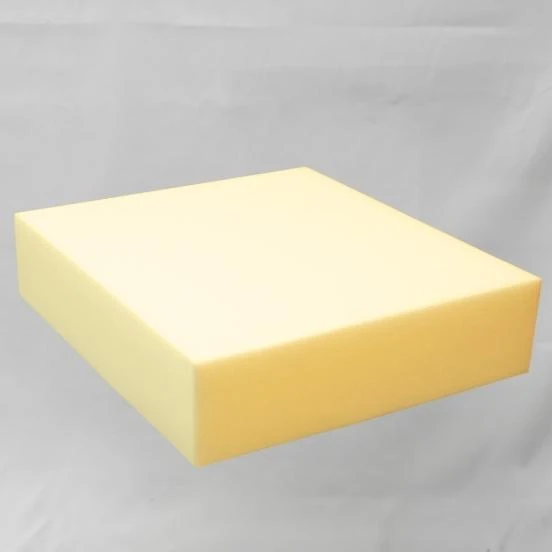
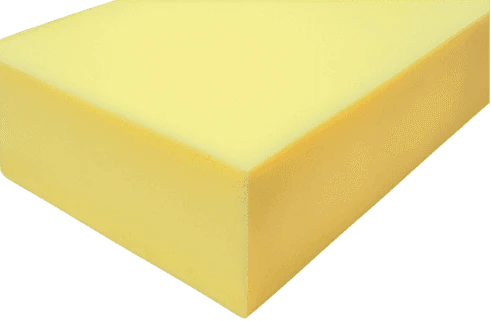
Open-cell polyurethane, free of fire-retardant chemicals, in three quality tiers. EverFlex is our premium high-resilience line for the main living room sofa that gets daily use. DuraFlex is the mid-tier, and EconoFlex is our value tier.
Foam
Tier
Feel
Density (lb/ft³)
ILD
V24
EverFlex
Soft
2.6
24
V34
EverFlex
Medium
2.6
34
V44
EverFlex
Firm
2.8
44
V54
EverFlex
Extra-firm
2.9
54
D30
DuraFlex
Soft
2.2
30
D40
DuraFlex
Medium
2.2
40
D50
DuraFlex
Firm
2.2
50
C25
EconoFlex
Soft
1.8
25
C33
EconoFlex
Medium
1.8
33
C55
EconoFlex
Extra-firm
1.8
55
Match firmness to thickness. V44 suits most 4 to 6 inch sofa seat cushions. For thinner or thicker seats, and for back cushions, see our tips below.
Organic Natural Latex
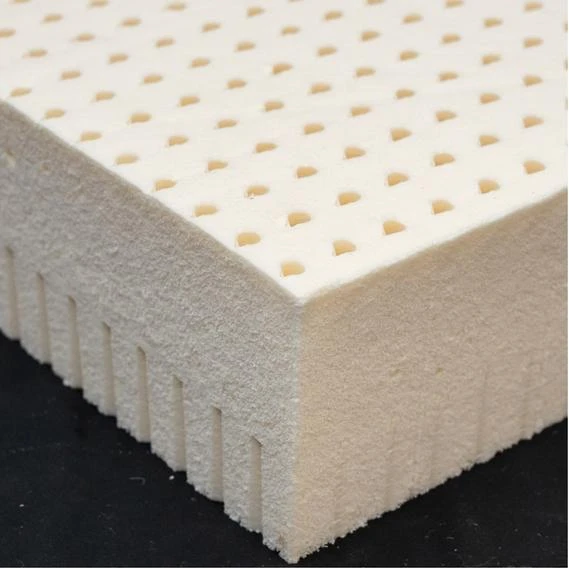
GOLS-certified organic latex made from rubber-tree sap. It's naturally breathable, antimicrobial, and biodegradable, at roughly 5.9 lb/ft³ density throughout. Its springy feel rebounds quickly, so sofa seats don't hold the impression of whoever sat there last.
Foam
Feel
ILD
N25
Softest
25
N28
Soft
28
N31
Medium
31
N36
Medium-firm
36
N45
Firmest
45
For standard-thickness latex sofa seat cushions, medium N31 or medium-firm N36 is the most popular choice, with a softer N28 for back cushions. See all organic latex cushions.
Memory Foam
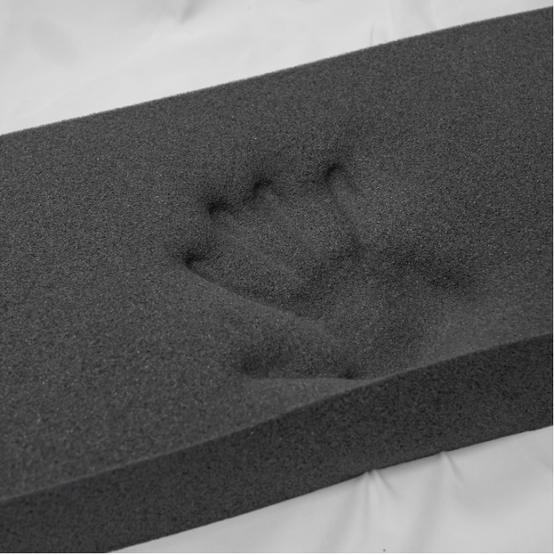
Slow-contouring, body-hugging foam (5.3 lb/ft³, ILD 13). On its own it lets you sink too deep into a couch seat, so it works best as a top layer over a firmer polyurethane base. To build a layered sofa cushion, call us, or order both pieces and ask us to glue them together in your order comments.
Replacing cushions on a patio sofa or outdoor sectional? Our outdoor cushions use quick-draining outdoor foam.
Wraps
Dacron · down · cotton · organic wool
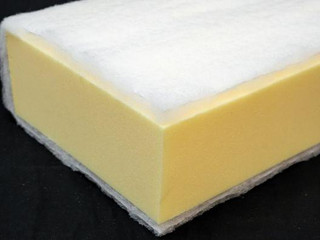
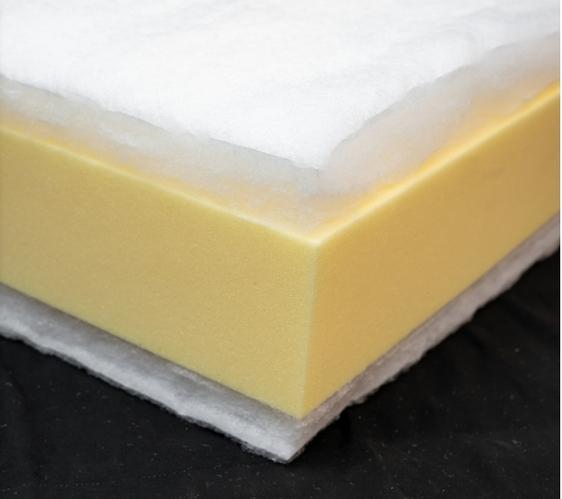
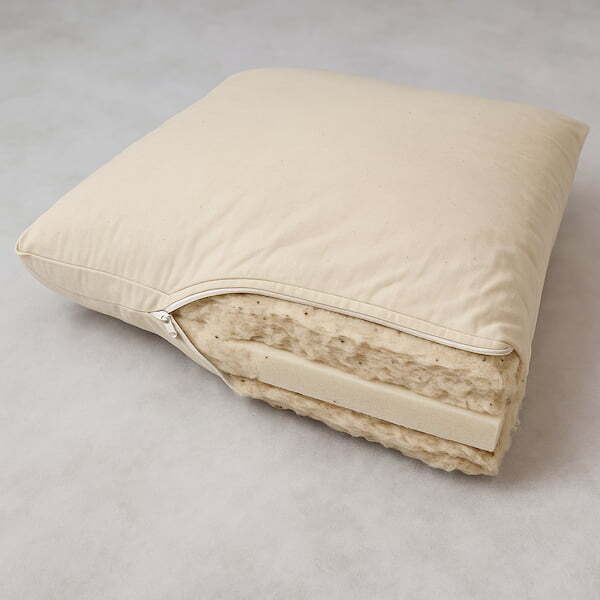
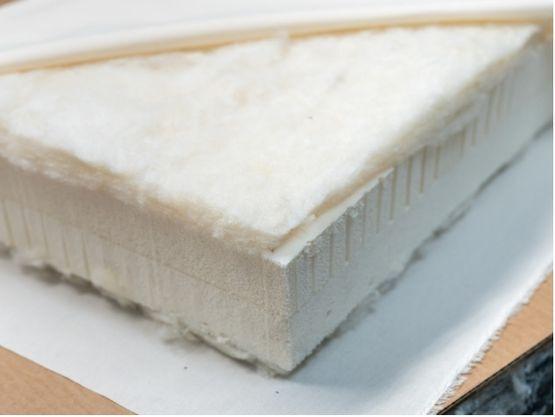
A wrap goes around the foam to round its edges and fill out the cover, so the couch cushion looks upholstered rather than boxy. Dacron is standard and strongly recommended on every sofa cushion. Without a wrap, the cover tends to look baggy and wrinkled.
Dacron Wrap: four configurations
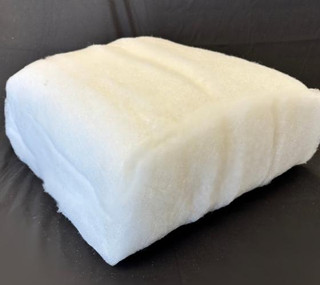
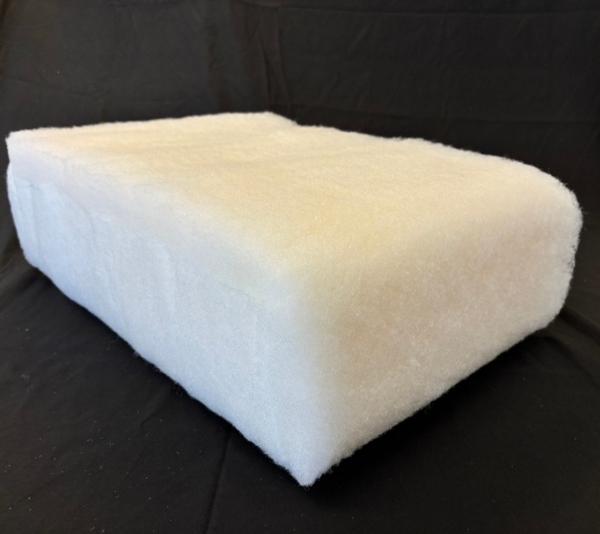
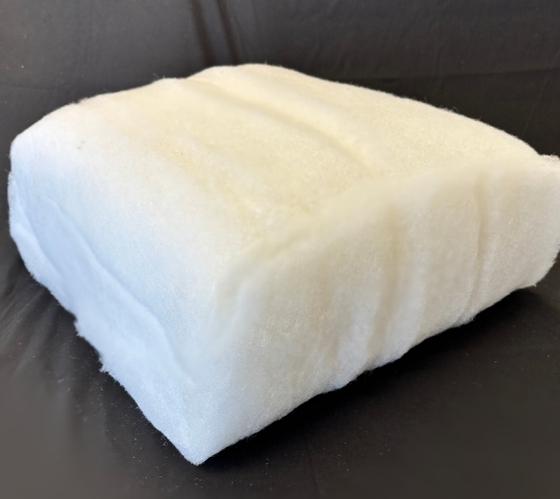
Polyester batting wrapped around the foam. Choose where it wraps (book vs. all sides) and how much (single vs. double thickness). A double wrap gives sofa cushions the full, crowned look you see on high-end living room furniture.
Book Wrap
Wrap All Sides
Double Dacron Book Wrap
Double Dacron All Sides
Other wrap options
Down Envelope (available with all foam types)
A self-fluffing down envelope gives a deep-seated sofa that soft, sink-in lounge feel, while the foam inside re-lofts the down every time you get up. It's especially popular on couch back cushions. Down creates a plump cushion with a large crown, so for a crisp, tailored look on a modern sofa, stick with Dacron.
Cotton Wrap & Cover (available only with organic latex)
A 1-inch (25 mm) layer of 100% cotton batting, then a custom-sized, zippered 100% cotton case that slides easily into your sofa cushion cover.
Organic Wool & Muslin Book Wrap (available only with organic latex)
Keeps the build all-natural while hiding the pin-holes that can show through thin fabric and preventing a baggy, sloppy look.
Covers
5,000+ fabrics · foam only · cover only · supply your own (COM)
Re-cover your couch cushions in a new fabric, or keep the covers you have. Our library spans 5,000+ fabrics from leading mills:
Brands — Robert Allen, Premier Prints, Sunbrella, Trivantage, Hemp, and our own FoamOrder line.
Narrow them down by:
Filter
Choices
Application
Indoor for sofas, loveseats, and sectionals (outdoor and nautical also available)
The full spectrum, including aqua, beige, blue, brown, green, grey, ivory, orange, pink, purple, red, white, and yellow
Price
Three tiers, from value ($) to premium ($$$)
For a family couch that kids and pets climb on, a synthetic or coated fabric is easier to clean and holds up better than a delicate natural weave. If you're re-covering only some cushions, order a swatch first so the new fabric sits well next to the sofa's arms and frame.
Three flexible paths if you don't need complete new cushions:
Foam only — keep your sofa's existing covers and replace just the flattened foam inserts. Match the original thickness so the covers zip closed.
Welt cording · top stitching · Velcro · zipper placement
This is where custom replacement sofa cushions pull ahead of generic inserts. Dial in the construction details:
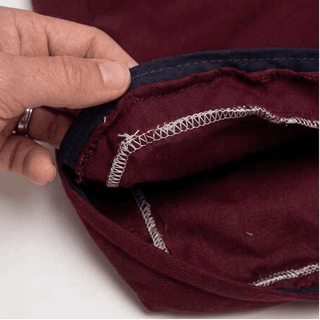
Edge finish: Overlock
Overlocking sews and finishes the inside fabric edges so they can't fray or unravel. It keeps couch cushion covers intact through years of flipping, zipping, and washing.
Edge style: Welt Cording or Top Stitching
Welt Cording
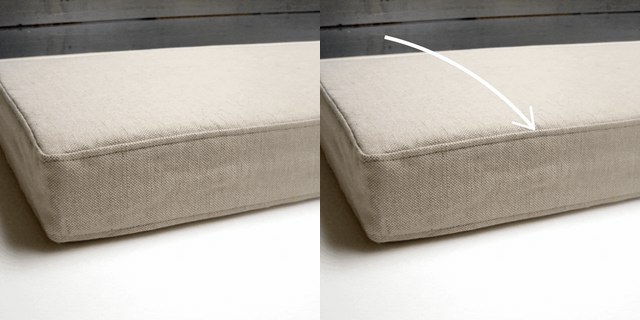
The classic piped edge on most traditional sofas and loveseats. Match it to the cover fabric for a seamless finish, or pick a contrasting fabric to outline each cushion.
Top Stitching
A clean, durable stitched edge that suits modern and mid-century sofas and adds strength along the seams.
Attachment: Velcro
Couch seat cushions tend to creep forward, especially on leather sofas and slick sofa decks. Sewn-on Velcro straps hold them in place. Fabric ties are available too, but they're mainly for chairs and benches with spindles or posts to tie to.
We can also add adhesive Velcro strips to your custom sofa cushions on request. Mention it in your order comments, or call customer service at (415) 503-9314.
Closure: Zipper Placement
The zipper is flapped and hidden. On sofa seat cushions it usually runs along the back edge, against the sofa back, so you can flip and rotate cushions to even out wear without the zipper showing.
Option
How it works
Across a side
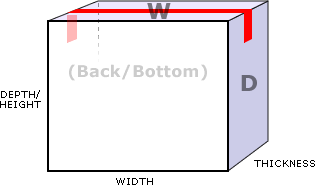
Runs along the width, depth, or back/bottom, centered on the longest edge of that side.
Around the middle
Wraps three sides at mid-thickness. Best for cube-shaped cushions over 10 inches thick, like ottoman or floor cushions.
Custom location
Describe exactly where you want it, or send a marked diagram.
Every one of these is yours to set, and every couch cushion is still cut to order in the U.S.
From the FoamOrder shop floor
FoamOrder Tips for Replacing Sofa Cushions
Our team has cut replacement cushions for thousands of sofas. These are the tips we give customers who want their new cushions to look and feel right the first time.
When in doubt, measure a little big
A slightly oversized cushion looks plump, but an undersized one leaves the cover loose and saggy.
An undersized cushion is the harder mistake to live with. Foam that runs slightly large compresses to fill the cover and looks full and plump, while foam that runs small leaves the cover loose and wrinkled. Measure between the seams using our guide to measuring foam cushions, and if a measurement falls between two numbers, round up rather than down.
EconoFlex™ is likely a match for your original foam, not a downgrade
We offer three grades of indoor foam, and our value grade matches what most sofas come with.
Once you choose your shape, enter your measurements, and select indoor foam, you’ll be asked to pick one of our three grades:
EconoFlex™Value1.8 lb/ft³DuraFlex™Mid-tier2.2 lb/ft³EverFlex™Premium2.6 to 2.9 lb/ft³
Most furniture manufacturers fill their cushions with foam around 1.8 lb/ft³ in density, the same density as our EconoFlex™. Choosing EconoFlex™ will likely give you the same foam your sofa came with, while DuraFlex™ and EverFlex™ are upgrades that hold their shape longer.
Thin or thick seat cushions? Adjust the firmness
Below 4 inches, step up a firmness level. Above 6 inches, step down.
Thickness changes how firm a foam feels. Below 4 inches, there is less foam under you, so it has to do more work to support you. Above 6 inches, there is more foam under you, so it has less work to do.
For seat cushions thinner than 4 inches, we recommend stepping up a firmness level at the firmness step from what you would choose for a standard 4 to 6 inch cushion, so you don’t sink through to the sofa frame. For seat cushions thicker than 6 inches, we recommend stepping down a firmness level for a plusher seat.
The right firmness also depends on who is sitting. Pick a foam in the chart below to see how it’s likely to feel at each cushion thickness for sitters of different weights.
Firmness is personal. Feel varies with your body, posture, and what you’re used to. This chart is a reference to help you narrow your options, not a guarantee of how a cushion will feel to you.
Switching back cushions to foam? Start with the softest option
Foam feels firmer than fiber or feather fill, so the softest choice is usually the right one.
Most sofa back cushions are filled with polyester fiber or feathers, and foam is firmer and more supportive by nature. Even our softest foam will feel firmer than the fill you are used to leaning against, so at the firmness step, choose the softest grade in whichever foam quality you picked: EverFlex™ V24, DuraFlex™ D30, or EconoFlex™ C25. That is the choice that keeps most households happy.
Prefer to keep the soft, loose feel your back cushions have now? Skip the foam and refill them with our pillow and cushion stuffing instead, which is a closer match for the fill they came with.
Give foam back cushions a double wrap or a down envelope
Back covers are made for fiber fill, so foam with a single wrap can look boxy.
Back cushion covers are usually sewn for fiber fill, with a full, rounded face (the crown) and relatively short side panels (the boxing). Foam has a flat face and square edges, so with a single wrap or no wrap it can look boxy and may sit oddly in a cover built for fill.
Single DacronFlatter, tailoredDouble DacronFuller crownDown envelopeMost loft
A double Dacron wrap or a down envelope adds back the crown those covers were designed around. A down envelope gives the most loft of the two, though it adds considerably to the cost.
If you’d rather skip foam altogether, refill the covers with one of our cushion stuffing options, including polyester fiber, cotton and wool batting, and shredded latex, memory, and polyurethane foam. Loose fill takes the shape of the cover, so it fills out the crown the way the cover was designed.
How do I measure properly for replacement couch cushions?
Measure your cushion cover between the seams, not the old foam, with the foam still inside the case. Old foam has compressed over time, so it is no longer an accurate guide to the size your replacement should be.
Measure between seams: If possible, measure dimensions between the seams or between the cording of the case, with the foam inside.
Imagine a seam if one doesn’t exist: If there are no seams and you need to eyeball your measurement, you’ll have to imagine the seam. Rounded sides are often caused by Dacron/polyester batting, so measure to just before the curvature of the fabric rather than all the way to the edge.
The best foam for indoor couch cushions used most days is high-resilience polyurethane foam. For most people that means our V44 EverFlex foam (2.8 lb/ft³ density, ILD 44) in cushions between 4 and 6 inches thick. If your cushion is thinner than 4 inches, choose the firmer V54; if it is thicker than 6 inches, choose the softer V34.
We offer two main foam families for indoor couch and sofa cushions: traditional polyurethane (free of harmful chemicals) and organic latex. For a lower-cost option, our EconoFlex foam is a like-for-like match for the foam most sofas come with. For organic latex, we recommend medium N31 or medium-firm N36 for standard-thickness cushions. You can also add memory foam as a top layer above a firmer polyurethane base for a body-contouring feel.
Should I order dacron (polyester) batting with my couch or sofa cushions?
Yes, we recommend dacron batting on every couch and sofa cushion, usually as a book wrap on seat cushions. Batting gives an upholstered cushion that full, comfortable, rounded look; without it, new custom cushions will show wrinkles in the fabric. Foam back cushions look best with a double Dacron wrap or a down envelope, since back covers are usually sewn for a fuller fill.
If you need extra padding around your cushion, consider a double-dacron book wrap, or wrap all sides. For our high-end organic latex cushions, we recommend organic cotton or organic wool batting with an organic cotton wrap, which keeps the build all-natural while providing premium padding. We guarantee you’ll feel the difference.
If you really don’t want any batting, order the foam slightly thicker (1/4" to 1/2") than the case to make sure it fills the cover as much as possible.
How thick should couch cushions be?
Most couch and sofa cushions should be between 4 and 6 inches thick. When ordering replacement cushions, keep the thickness the same as the original so you can reuse the slipcovers that came with the couch.
If you are ordering brand-new cushions, any thickness that works within the design of the couch is fine, but more than 6 inches is usually unnecessary, and thinner than 4 inches may lead to heavier users “bottoming out” and hitting the support materials below the cushions. The top of a seat cushion should generally sit between 18" and 20" from the floor; any taller and some people won’t be able to rest their feet comfortably on the floor.
Can you buy replacement cushions for a couch?
Yes. You can replace just the cushions on most couches instead of buying a new sofa. Original manufacturers often don’t sell individual cushions, especially for older or discontinued models, so the usual route is custom replacement cushions cut to your own measurements.
You can order new seat and back cushions complete with fabric covers, or order foam inserts only and reuse the covers you already have.
How do you fix sagging couch cushions?
The lasting fix for sagging couch cushions is replacing the worn foam inserts with new high-density foam. Flipping cushions, stuffing in polyester fill, or sliding plywood underneath only buys time, because the original foam has lost its density and support.
First, take the cushions off and press on the sofa deck. If the springs or webbing sag, repair those too, since new foam won’t fix a failing frame. For most everyday sofa seats that are 4 to 6 inches thick, a high-resilience foam such as V44 EverFlex (2.8 lb/ft³ density, ILD 44) restores support. See our guide on how to replace foam in couch cushions.
How do you keep couch cushions from sliding?
The most reliable way to keep couch cushions from sliding is to attach them with Velcro, either straps sewn onto the cushion covers or adhesive Velcro strips that connect the cushion to the sofa deck. A non-slip rug pad or grip liner under the seat cushions also helps, especially on leather sofas.
Cushions that fit the seat edge to edge slide much less, so worn or undersized cushions are often the real cause. FoamOrder can add sewn-on Velcro straps to custom sofa cushions, and adhesive Velcro on request.