Topics

Foam ImprovementDIY & How ToFoam UtilityFoam Information
  • Clearance
  • Upholstery Supplies
  • Foam Learning Center


Replacement + Custom Cushions
Indoor CushionsOutdoor CushionsCushions By Shape
    Category image
    Foam
    Custom Cut FoamUpholstery SheetsClosed Cell FoamShredded FoamFoam SamplesClearance
      Category image
      Organic
      Organic Custom CushionsOrganic MattressesOrganic Mattress CoversOrganic Mattress ToppersOrganic Wool & Cotton Batting
        Category image
        Fabrics & Covers
        Custom Cushion CoversUpholstery Fabric By The YardMattress CoversFabric Yardage CalculatorClearance
          Category image
          Bedding Accessories
          Mattress ToppersOrganic Mattress Covers/PadsPillowsBedding Fabric LiningsClearance
            Category image
            Mattresses
            Foam MattressesMemory Foam MattressesOrganic Latex MattressesCustom (Build Your Own)Custom Boat MattressCustom RV Mattress
              Category image
              Neoprene
              Commercial
              Bar and RestaurantHospitality/Hotel/ResortGolf and Country ClubApartment ComplexChurch/SynagogueWholesale & Work RoomClosed Cell FoamFace Shield/PPE Foam
                Category image
                DIY
                Foam AdhesiveScrap & Shredded FoamFoam for CosplayPoker & Gaming TablesArts & Crafts FoamUpholstery StaplersAccessoriesBattingPillow StuffingPit FoamClearance
                  Category image
                  Foam Information · Complete Guide

                  Types of Foam: The Complete Guide

                  Foam is practically everywhere: in our beds, our couches, our shoes, and our shipping boxes. When you're shopping for it, you're usually choosing between two main families. There's open-cell foam, which is soft and breathable (think memory foam or latex), and closed-cell foam, which is firm and water-resistant (like neoprene or EVA). Which one is right for you? It all depends on what you're trying to do—whether that's adding some cushion, absorbing an impact, or making something float.

                  Mike Handelsman, Owner & President of FoamOrder
                  Mike Handelsman
                  CEO, FoamOrder
                  12 min read
                  Different foam types — open cell vs. closed cell foam

                  We put this guide together to cover every foam you’re likely to come across. We’ll show you exactly what each one is good for and answer the questions people ask us the most. We’ve broken it down into two main sections: Part one is all about everyday uses (think comfort, crafting, storage, and keeping things safe). Part two shifts gears to construction and industrial foams, like spray foam and rigid insulation, which do a completely different kind of job.

                  01 — Quick Reference

                  Quick Reference: Foam Types at a Glance

                  Foam Type Cell Structure Best Known For
                  Polyurethane (conventional)Open cellEveryday cushions and upholstery
                  High resilience (HR)Open cellLong-lasting, springy seating
                  Memory foamOpen cell (viscoelastic)Pressure relief, mattresses
                  Gel memory foamOpen cell (viscoelastic)Cooler-sleeping memory foam
                  LatexOpen cellBuoyant, durable, natural option
                  Dry fast (reticulated)Open cell (netted)Outdoor and marine cushions
                  RebondOpen cell (bonded chips)Carpet pad, gym mats, firm bases
                  Shredded foamLoose fillBean bags, pillows, pet beds
                  Polyethylene (PE)Closed cellPackaging, flotation
                  Cross-linked PE (XLPE)Closed cellTougher, smoother PE
                  EVAClosed cellCosplay, play mats, midsoles
                  VolaraClosed cell (fine cell)Premium case and medical lining
                  FlotexClosed cellFlotation cushions, exercise mats
                  NeopreneClosed cell rubberWetsuits, sleeves, gaskets
                  Acoustic foamOpen cellTaming echo and reverb
                  MelamineOpen cell resinAcoustic panels, Magic Erasers
                  Charcoal packing foamOpen cellCase inserts, foam pits
                  Floral foamOpen cell (phenolic)Flower arranging
                  02 — How Foam Is Measured

                  The Main Specs That Define a Foam

                  Every type of foam is graded by a handful of measured properties. The two most common are density and firmness, but they are incredibly easy to mix up. The key difference? Density predicts how long the foam will hold up over time, whereas firmness (or ILD) describes how soft or hard it feels when you press on it. Because they measure two different things, a soft foam can have high density, and a firm foam can have low density. Let's take a look at the actual numbers you'll spot on a spec sheet.

                  Density

                  lb/ft³
                  Durability & lifespan

                  The weight of raw foam material in a cubic foot. More material means the foam holds its shape and resists sagging for more years. It says nothing about how soft or firm the foam feels.

                  Firmness (ILD / IFD)

                  lbf @ 25%
                  How it feels

                  Indentation Load Deflection: the pounds of force a 50-square-inch plate needs to compress a standard 4-inch-thick foam sample by 25 percent of its thickness. A higher ILD feels firmer, a lower ILD feels softer. This is the number you tune to get the sit you want.

                  Support Factor

                  ratio
                  Comfort quality

                  Also called sag or compression modulus: the 65 percent ILD divided by the 25 percent ILD. A higher ratio means the surface gives softly but the foam resists bottoming out. HR foams score high here.

                  Resilience

                  % rebound
                  Springiness

                  Measured with a ball rebound test: drop a steel ball and see how high it bounces back. High resilience feels lively and responsive like latex or HR foam; very low resilience is the slow, dead feel of memory foam.

                  03 — Everyday & Specialty Foams

                  Everyday and Specialty Foam Types

                  These are the flexible and specialty foams you're most likely shopping for. You'll recognize these materials from everyday items like cushions, mattresses, protective cases, cosplay builds, acoustic panels, and outdoor gear. We've organized them into three main groups based on how they’re used: Comfort foams, closed-cell foams and specialty & utility foams.

                  Open Cell

                  Polyurethane Foam (Conventional)

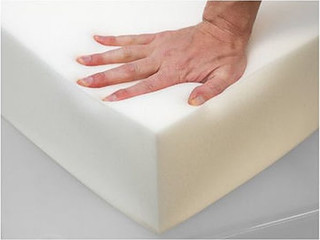
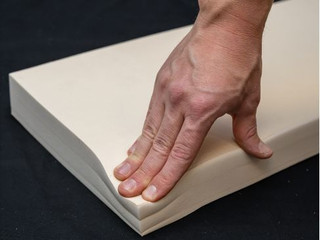
                  White conventional polyurethane foam
                  Relative Cost
                  $$$$
                  Expected Lifespan
                  3–5 yrs daily use
                  DIY Workability
                  Easy — electric carving knife; takes spray adhesive well
                  Certifications to look for
                  CertiPUR-US

                  Polyurethane foam is the workhorse of the foam world and the material inside most furniture made in the last 60 years. It is an open cell foam produced in a huge range of densities and firmness levels, from soft bargain-grade foam to dense, long-wearing upholstery grades — available at FoamOrder as custom-cut polyurethane foam or in upholstery sheets. It is affordable, easy to cut and glue, and simple to match to a specific feel, which is why it remains the default choice for seating.

                  Best Uses
                  • Sofa, chair, and bench cushions
                  • Dining chair and window seat pads
                  • Mattress layers and toppers
                  • Headboards and upholstered panels
                  • General DIY padding projects
                  How it feels

                  Sitting on it feels plush and immediate — it gives quickly under your weight and springs back, though softer grades can start to feel a little dead after years. To the hand it is the familiar spongy cushion foam everyone knows.

                  White conventional polyurethane foam
                  Q
                  Most Frequently Asked Question About This Foam

                  What foam density is best for couch cushions?

                  For seat cushions that get daily use, choose high density polyurethane foam of at least 1.8 pounds per cubic foot, and ideally 2.5 pounds or higher for the longest life. Density measures durability, not firmness. Firmness is a separate rating (ILD), so a high density foam can be made soft, medium, or firm.

                  Open Cell

                  High Resilience (HR) Foam

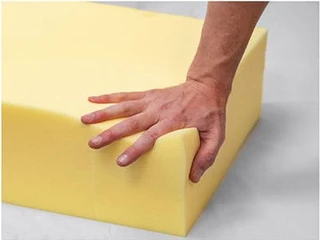
                  Yellow high resilience (HR) polyurethane foam block
                  Relative Cost
                  $$$$
                  Expected Lifespan
                  10+ yrs daily use
                  DIY Workability
                  Easy — carving knife; glues well
                  Certifications to look for
                  CertiPUR-US

                  High resilience foam is the premium tier of polyurethane. Its cell structure is more irregular and latex-like, which gives it a springy, supportive feel and a much higher support factor than conventional foam. HR foam typically comes in densities of 2.5 to 3.0 pounds per cubic foot and can outlast conventional foam by years in daily-use seating. FoamOrder cuts it to size as high-density foam.

                  Best Uses
                  • High-end sofa and sectional cushions
                  • Seating that gets heavy daily use
                  • Boat and RV cushions
                  • Firm, supportive mattress cores
                  How it feels

                  A livelier, more buoyant sit than conventional foam — it pushes back as it cradles, so you feel supported on top rather than sunk in. Under the hand it has a springy, almost latex-like bounce.

                  Yellow high resilience (HR) polyurethane foam block
                  Q
                  Most Frequently Asked Question About This Foam

                  What is the difference between HR foam and regular foam?

                  HR foam recovers faster, supports more evenly, and resists softening and sagging far longer than conventional polyurethane. The tradeoff is cost: HR foam runs noticeably more per cushion, but for furniture you sit on every day it is usually the cheaper option over a ten year span.

                  Viscoelastic

                  Memory Foam (Viscoelastic)

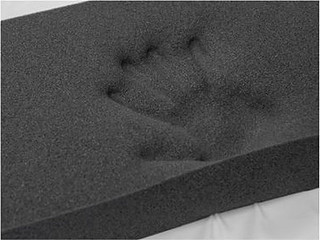
                  Handprint in charcoal memory foam
                  Relative Cost
                  $$$$
                  Expected Lifespan
                  5–8 yrs
                  DIY Workability
                  Easy to cut and glue; slick to handle
                  Certifications to look for
                  CertiPUR-US

                  Memory foam is a viscoelastic type of polyurethane originally developed for NASA to cushion test pilots. It softens in response to body heat, contours slowly to your shape, and recovers slowly when you move, which is what produces its signature pressure relief. That same slow response is why it behaves very differently from regular foam in seating applications. FoamOrder's house version is PostureSense memory foam.

                  Best Uses
                  • Mattresses and mattress toppers
                  • Pillows
                  • Wheelchair, medical, and pressure-relief cushions
                  • Comfort top layers over firmer foam
                  How it feels

                  Press it and your handprint slowly appears, then fades. It softens with body heat and molds to your shape, giving a cradled, weightless, slow-sinking feel with almost no push-back — you settle into it rather than sit on it.

                  Handprint in charcoal memory foam
                  Q
                  Most Frequently Asked Question About This Foam

                  Is memory foam good for seat cushions?

                  Not by itself. Under concentrated, sustained sitting weight, memory foam compresses fully and bottoms out, and body heat makes it softer the longer you sit. It works best as a 1 inch comfort layer glued over a firm HR foam base, which gives you the contouring feel with real support underneath.

                  Viscoelastic

                  Gel Memory Foam

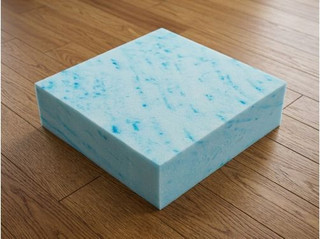
                  Gel-infused memory foam cushion
                  Relative Cost
                  $$$$
                  Expected Lifespan
                  5–8 yrs
                  DIY Workability
                  Easy to cut and glue
                  Certifications to look for
                  CertiPUR-US

                  Gel memory foam is standard viscoelastic foam with gel beads or swirls mixed in to pull heat away from the body. The gel gives the foam a cooler first touch and, in some formulations, a slightly quicker recovery than traditional memory foam. Everything else about it behaves like regular memory foam.

                  Best Uses
                  • Mattresses and toppers for warm sleepers
                  • Pillows
                  • Office chair and driver seat cushions
                  • Comfort layers in warm climates
                  How it feels

                  The same slow, contouring melt as memory foam, but noticeably cool to the touch when you first lie down as the gel pulls heat from your skin. That cool feeling fades as the foam warms to you.

                  Gel-infused memory foam cushion
                  Q
                  Most Frequently Asked Question About This Foam

                  Does gel memory foam actually sleep cooler?

                  Somewhat, and mostly early in the night. Gel absorbs body heat on contact but eventually saturates, so the effect fades over hours. Airflow matters more for all-night cooling: ventilated covers, breathable fabrics, and open cell comfort layers do more than gel alone.

                  Open Cell

                  Latex Foam

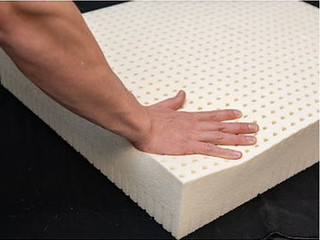
                  Natural latex foam sheet
                  Relative Cost
                  $$$$
                  Expected Lifespan
                  10–20 yrs
                  DIY Workability
                  Sharp blade; heavy and dense; contact cement
                  Certifications to look for
                  GOLS · Oeko-Tex · eco-INSTITUT

                  Latex foam is made from natural rubber tree sap, synthetic rubber, or a blend, and is what most people historically meant by the phrase foam rubber. It is buoyant, instantly responsive, extremely durable, and naturally resistant to dust mites and mold. Natural and organic latex is the go-to for eco-conscious buyers, and it is the core material in FoamOrder's organic cushions and latex mattresses. The tradeoffs are weight and price: latex is heavy and costs more than polyurethane.

                  Best Uses
                  • Organic and natural mattresses
                  • Cushions with a lively, buoyant feel
                  • Latex pillows
                  • Mattress toppers
                  How it feels

                  A distinctively lively, buoyant bounce — it responds instantly and pushes back the moment you lift away, with none of the slow sink of memory foam. In the hand it feels dense, springy, and substantial rather than squishy.

                  Natural latex foam sheet
                  Q
                  Most Frequently Asked Question About This Foam

                  What is the difference between Dunlop and Talalay latex?

                  Dunlop latex is denser, firmer, and more supportive, which makes it the better choice for seat cushions and mattress cores. Talalay latex is lighter, softer, and more consistent from edge to edge, which is why it shows up in pillows and plush comfort layers. Both can be made from natural latex, but only Dunlop can be certified organic (GOLS): the Talalay process can't earn that certification and often blends in some synthetic latex. Either one, when it is natural latex, is naturally hypoallergenic and resistant to dust mites and mold.

                  Open Cell · Reticulated

                  Dry Fast Foam (Reticulated Outdoor Foam)

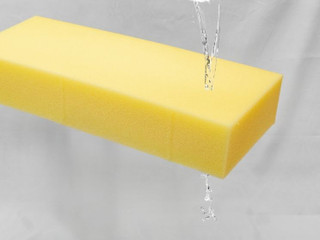
                  Dry fast reticulated outdoor foam
                  Relative Cost
                  $$$$
                  Expected Lifespan
                  5–8 yrs outdoors
                  DIY Workability
                  Easy — carving knife; glues well
                  Certifications to look for
                  CertiPUR-US

                  Dry fast foam is an open cell polyurethane that has been reticulated, meaning the cell walls are blown open into a net-like structure. Water pours straight through it instead of soaking in, so a drenched cushion can drain and air-dry in hours, and mold and mildew have nowhere to take hold. It is the standard recommendation for any cushion that lives outside, and it is what FoamOrder uses in outdoor foam cushions.

                  Best Uses
                  • Patio and outdoor furniture cushions
                  • Boat and marine seating
                  • Poolside loungers and daybeds
                  • Outdoor benches and window seats
                  • Spa and shower seating
                  How it feels

                  Firmer and more open than a normal cushion, with a slightly coarse, netted surface you can feel through thin fabric. Squeeze a wet piece and water pours straight through it instead of holding in your hand.

                  Dry fast reticulated outdoor foam
                  Q
                  Most Frequently Asked Question About This Foam

                  Can outdoor foam cushions be left out in the rain?

                  Yes, if the cushion uses dry fast foam with a breathable, solution-dyed cover. Rain drains through the foam and the cushion dries quickly, especially if you tilt it on edge. During long wet stretches or over winter, it is still smart to store cushions to protect the fabric and stitching.

                  Open Cell · Bonded

                  Rebond Foam

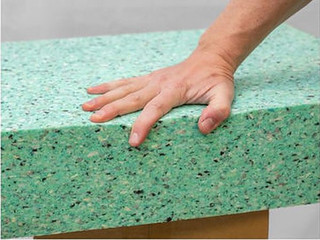
                  Rebond foam carpet padding
                  Relative Cost
                  $$$$
                  Expected Lifespan
                  10+ yrs
                  DIY Workability
                  Tough to cut at home; best pre-cut; glues well
                  Certifications to look for
                  CertiPUR-US (certified scrap)

                  Rebond foam, also called bonded foam or chip foam, is made by shredding scrap polyurethane and pressing the chips back together with adhesive. The result is a dense, heavy, very firm foam with a distinctive multicolor confetti look. It is too hard for lounging comfort on its own, but nothing beats it for firm, high-traffic padding on a budget. FoamOrder cuts it to size as recycled rebond foam.

                  Best Uses
                  • Carpet padding
                  • Gym, wrestling, and martial arts mats
                  • Firm base layers under softer cushion foam
                  • Equipment and machinery padding
                  How it feels

                  Hard, dense, and unforgiving — it barely gives under a hand and feels solid and heavy, with a lumpy, chip-flecked texture you can feel through a thin cover. This is padding you stand or kneel on, not something you sink into.

                  Rebond foam carpet padding
                  Q
                  Most Frequently Asked Question About This Foam

                  Is rebond foam good for seat cushions?

                  Only where you want very firm seating, such as commercial booths, church pews, or bases that will be topped with a softer layer. As a standalone lounge cushion it feels hard and unforgiving, so most furniture applications pair it with 1 to 2 inches of softer foam on top.

                  Loose Fill

                  Shredded Foam

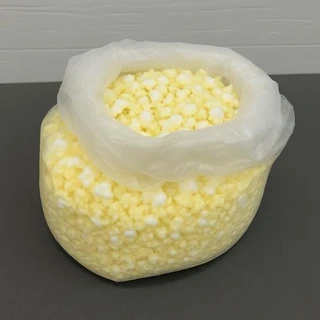
                  Shredded foam fill
                  Relative Cost
                  $$$$
                  Expected Lifespan
                  3–5 yrs (refillable)
                  DIY Workability
                  No cutting — just fill; some machine-washable
                  Certifications to look for
                  CertiPUR-US (certified foam)

                  Shredded foam is polyurethane or memory foam chopped into small pieces and used as loose fill. It creates a soft, moldable, scrunchable cushioning that conforms however you push it, which solid foam cannot do. It is also one of the most economical fills available since it makes use of production offcuts. FoamOrder sells it by the bag as shredded foam.

                  Best Uses
                  • Bean bag chairs
                  • Throw pillows and floor poufs
                  • Pet beds
                  • Stuffed craft and sewing projects
                  How it feels

                  Loose and scrunchable, like a sack of soft crumbs — it shifts and molds around your hand or body, and you can punch, fluff, or scoop it into whatever shape you want. It never holds one firm surface the way solid foam does.

                  Shredded foam fill
                  Q
                  Most Frequently Asked Question About This Foam

                  Can you wash shredded foam pillows?

                  Often yes, which is one advantage over solid foam. Many shredded foam pillows can be machine washed on gentle with cold water, then air dried completely before use. Always check the care tag, and never machine wash or dry a solid foam insert, since agitation tears the foam structure apart.

                  Surface Profile

                  Convoluted Foam (Egg Crate)

                  Convoluted egg crate foam
                  Relative Cost
                  $$$$
                  Expected Lifespan
                  3–5 yrs
                  DIY Workability
                  Pre-shaped; trim with knife or scissors; glues well
                  Certifications to look for
                  CertiPUR-US

                  Egg crate is a surface profile, not a chemistry: it is polyurethane or memory foam cut into a peak-and-valley pattern. The peaks compress easily for a softer feel, the valleys create airflow, and the shape spreads pressure and scatters sound. Cutting one sheet into two interlocking convoluted sheets also makes it economical.

                  Best Uses
                  • Mattress toppers
                  • Acoustic treatment panels
                  • Protective lids in cases and shipping boxes
                  • Medical positioning and pressure relief
                  How it feels

                  The bumpy ridges compress softly and unevenly, giving a gentle, almost massaging feel under you, while the valleys move air so the surface never feels hot or dense. Run a hand across it and you feel the peaks give first.

                  Convoluted egg crate foam
                  Q
                  Most Frequently Asked Question About This Foam

                  Which side of egg crate foam goes up?

                  The bumpy side goes up, facing you. The peaks cradle the body, distribute pressure, and let air circulate through the valleys, which keeps the surface cooler. The flat side sits against the mattress or case bottom to keep the topper stable.

                  Open Cell · Rated

                  Fire Retardant Foam

                  Fire retardant foam
                  Relative Cost
                  $$$$
                  Expected Lifespan
                  5–8 yrs
                  DIY Workability
                  Easy — carving knife; glues well
                  Certifications to look for
                  CertiPUR-US · TB 117 / TB 133

                  Fire retardant foam is polyurethane engineered or treated to meet specific flammability standards rather than a separate chemistry. Different grades target different codes: California TB 117-2013 covers residential smolder resistance, TB 133 and similar standards cover public occupancies, and aviation foams meet FAR 25.853. Commercial projects frequently require documented compliance, which is why FoamOrder stocks dedicated fire retardant foam.

                  Best Uses
                  • Restaurant, bar, and hospitality seating
                  • Hotel and multifamily furniture
                  • Healthcare and institutional settings
                  • Aircraft and commercial marine interiors
                  How it feels

                  It feels just like the polyurethane it is based on — plush or firm depending on the grade. The flame-resistant treatment is invisible to the touch, so you would never know it was rated just by sitting on it.

                  Fire retardant foam
                  Q
                  Most Frequently Asked Question About This Foam

                  When is fire retardant foam required?

                  Whenever the local code, fire marshal, or the venue's insurer requires it, which is common in restaurants, hotels, theaters, healthcare facilities, and public buildings, plus aviation and commercial marine settings. Residential upholstery in the US follows the TB 117-2013 smolder standard. When in doubt, ask the authority having jurisdiction before ordering.

                  Closed Cell

                  Polyethylene Foam (PE)

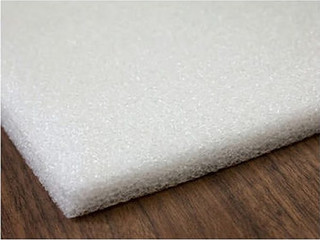
                  White polyethylene foam sheet
                  Relative Cost
                  $$$$
                  Expected Lifespan
                  10+ yrs
                  DIY Workability
                  Sharp blade or hot wire for clean edges; PE-safe adhesive
                  Certifications to look for
                  REACH / RoHS compliant

                  Polyethylene is the most common closed cell foam: stiff, lightweight, water resistant, and highly consistent from sheet to sheet. Because its sealed cells do not absorb water or compress permanently under normal loads, it excels at protecting things rather than cushioning people. It is one of several closed cell foams FoamOrder stocks.

                  Best Uses
                  • Protective packaging and shipping inserts
                  • Flotation billets and buoyancy fill
                  • Cores for gym and play padding
                  • Kneeling pads and garden pads
                  • Archery and target backstops
                  How it feels

                  Stiff, dense, and barely compressible — press it and it hardly moves, with a smooth, slightly waxy closed skin. It feels more like a firm board than a cushion, which is exactly why it protects rather than pampers.

                  White polyethylene foam sheet
                  Q
                  Most Frequently Asked Question About This Foam

                  Is polyethylene foam waterproof?

                  Effectively yes. Its closed cells cannot absorb water, so it floats indefinitely, dries with a wipe, and resists mold and mildew. Only a trace of surface moisture clings to the outer skin, which is why PE is the default for marine flotation and wet-environment padding.

                  Closed Cell

                  Cross-Linked Polyethylene Foam (XLPE)

                  Cross-linked polyethylene foam sheet
                  Relative Cost
                  $$$$
                  Expected Lifespan
                  10+ yrs
                  DIY Workability
                  Sharp blade or hot wire; heat-forms; contact cement
                  Certifications to look for
                  REACH / RoHS compliant

                  Cross-linked polyethylene is PE whose polymer chains have been chemically or radiation bonded to each other. The cross-linking produces finer cells, a smoother and almost rubbery surface, and better resistance to chemicals, heat, and repeated impact than standard PE. FoamOrder sells it as cross-poly foam.

                  Best Uses
                  • Firm boat and marine padding
                  • Packaging for delicate or polished surfaces
                  • Kneeling pads and athletic padding
                  • Orthotic and equipment padding
                  How it feels

                  A similar firm, closed-cell feel to standard PE, but smoother and almost rubbery in the hand, with a finer, softer skin that glides over surfaces instead of scuffing them. Still firm to press, just more refined to touch.

                  Cross-linked polyethylene foam sheet
                  Q
                  Most Frequently Asked Question About This Foam

                  What is the difference between XLPE and regular polyethylene foam?

                  Cross-linking gives XLPE finer cells, a smoother non-abrasive skin, and more toughness under repeated compression, heat, and chemical exposure. It costs more than standard PE, so choose XLPE when surface finish, skin contact, or long-term durability matter, and standard PE for basic packaging and flotation.

                  Closed Cell

                  EVA Foam

                  EVA foam
                  Relative Cost
                  $$$$
                  Expected Lifespan
                  5–10 yrs
                  DIY Workability
                  Very friendly — blade, heat-forms, sands smooth, takes paint
                  Certifications to look for
                  Oeko-Tex · CPSIA (kids' mats)

                  EVA (ethylene-vinyl acetate) is a closed cell foam with a soft, rubbery, almost leathery feel, sold in everything from thin craft sheets to thick interlocking floor tiles. It heat-forms at low temperatures, sands to smooth curves, and takes paint and sealers well, which has made it the signature material of the cosplay world. FoamOrder carries EVA foam sheets along with a dedicated cosplay foam selection.

                  Best Uses
                  • Cosplay armor, props, and costumes
                  • Interlocking play mats and gym flooring
                  • Tool drawer and case liners
                  • Martial arts and exercise mats
                  • Shoe midsoles and insoles
                  How it feels

                  Soft, rubbery, and slightly grippy — it bends and flexes easily in the hand with a smooth, leathery surface that feels warm and pliable rather than hard. Underfoot on a mat it has a cushioned, springy give.

                  EVA foam
                  Q
                  Most Frequently Asked Question About This Foam

                  Is EVA foam toxic?

                  Finished EVA foam is broadly considered safe for wearables, mats, and props. Some cheap imported play mats were flagged years ago for formamide residues, so buy from reputable suppliers that test their material. When sanding, heat-shaping, or hot-wire cutting EVA, work in a ventilated space and wear a respirator, since dust and fumes are the real exposure risk.

                  Closed Cell · Fine Cell

                  Volara Foam

                  Volara foam
                  Relative Cost
                  $$$$
                  Expected Lifespan
                  10+ yrs
                  DIY Workability
                  Thin — blade or scissors; thermoforms; laminates
                  Certifications to look for
                  FDA / medical grades available

                  Volara is a brand of irradiation cross-linked polyethylene made in thin rolls, typically 1/16 to 1/2 inch thick. Its cells are so fine and uniform that the surface feels smooth and almost skin-like, and it thermoforms, die-cuts, and laminates cleanly. When a project needs padding that looks finished and will never scratch what it touches, Volara is the usual answer.

                  Best Uses
                  • Instrument, camera, and display case lining
                  • Medical device and orthotic padding
                  • Gaskets and sealing tape
                  • Laminating layer under upholstery vinyl and fabric
                  How it feels

                  Thin, smooth, and almost skin-like — it feels finished and silky under a fingertip, with a fine sealed surface that glides rather than grabs. Being so thin, it pads and lines rather than cushions any real weight.

                  Volara foam
                  Q
                  Most Frequently Asked Question About This Foam

                  What is Volara foam used for?

                  Volara is used wherever thin, clean-looking, non-abrasive padding matters: lining cases for instruments and optics, padding medical devices and braces, gasketing, and as a foam backing laminated under vinyl or fabric. Its smooth sealed surface also wipes clean, which suits medical and food-adjacent uses.

                  Closed Cell

                  Flotex Foam

                  Flotex closed cell flotation foam
                  Relative Cost
                  $$$$
                  Expected Lifespan
                  10+ yrs
                  DIY Workability
                  Sharp blade; contact cement
                  Certifications to look for
                  —

                  Flotex is FoamOrder's flexible closed cell foam, softer and more pliable than rigid polyethylene boards while keeping the water resistance and buoyancy of a closed cell structure. That combination makes it comfortable enough to sit or exercise on and safe to soak. See the Flotex foam page for available sheet sizes.

                  Best Uses
                  • Flotation-friendly boat cushions
                  • Yoga and exercise mats
                  • Camping and sleeping pads
                  • Life preserver and buoyancy applications
                  How it feels

                  Softer and more pliable than a rigid foam board but still closed and water-shedding — it has a gentle, cushioned give underhand or underfoot and feels light and buoyant, comfortable enough to sit or kneel on and safe to soak.

                  Flotex closed cell flotation foam
                  Q
                  Most Frequently Asked Question About This Foam

                  Does Flotex foam float?

                  Yes. Its sealed cells trap air permanently, so it stays buoyant and never waterlogs, which is why it is used in flotation boat cushions and life preserver applications. Note that finished life-saving devices must meet their own certifications; the foam provides the buoyancy, not the rating.

                  Closed Cell Rubber

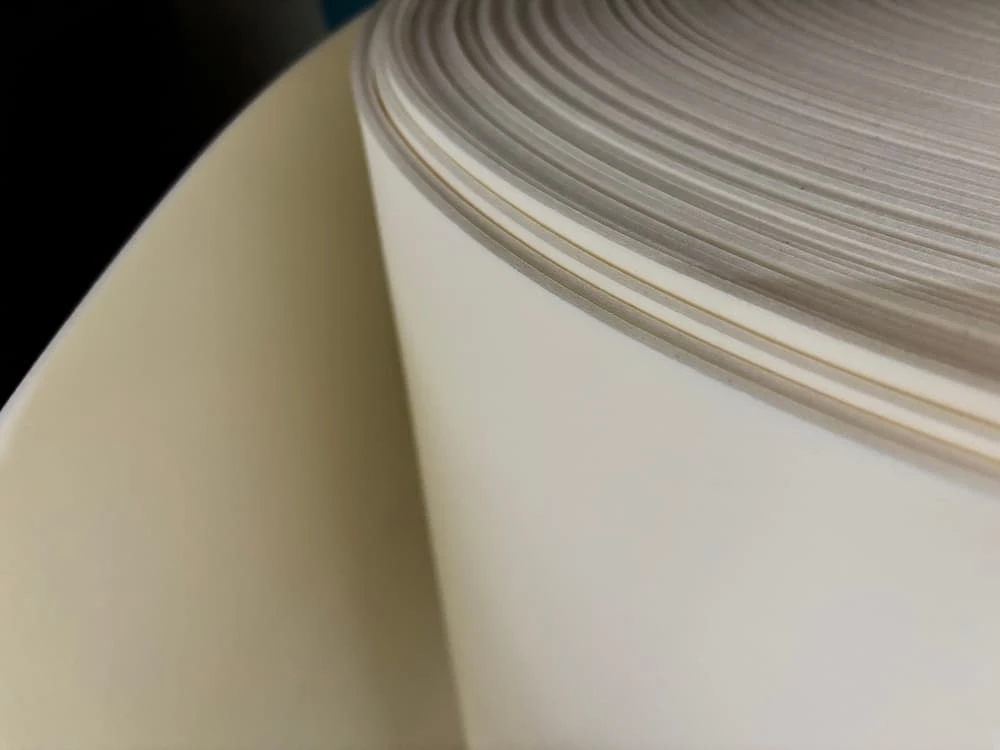
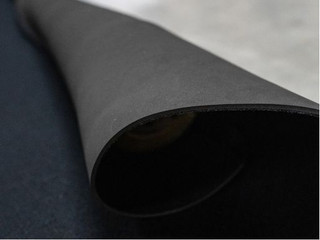
                  Neoprene Foam

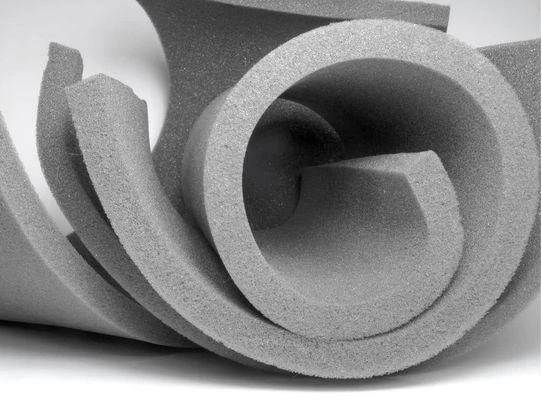
                  Neoprene foam sheet roll
                  Relative Cost
                  $$$$
                  Expected Lifespan
                  5–10 yrs
                  DIY Workability
                  Scissors or blade; sew or contact cement
                  Certifications to look for
                  Oeko-Tex (select)

                  Neoprene is a closed cell synthetic rubber foam, usually laminated with stretchy nylon fabric on one or both sides. It insulates even when wet, stretches and recovers, and shrugs off water, oils, UV, and many chemicals. FoamOrder stocks neoprene in over 100 color and thickness combinations.

                  Best Uses
                  • Wetsuits and water sports gear
                  • Laptop sleeves, koozies, and soft cases
                  • Gaskets and seals
                  • Knee, elbow, and joint supports
                  • Tool grips and equipment wraps
                  How it feels

                  Stretchy, cushioned, and grippy, with a soft fabric face that flexes and springs back — the unmistakable wetsuit feel. It is warm and slightly tacky against skin and hugs whatever it wraps.

                  Neoprene foam sheet roll
                  Q
                  Most Frequently Asked Question About This Foam

                  Is neoprene waterproof?

                  The foam itself is highly water resistant because its closed cells cannot absorb water, and it keeps insulating when wet. Whether a finished item is fully waterproof depends on construction, since fabric faces and stitched seams can wick. Wetsuits actually work by trapping a thin layer of water that your body warms.

                  Open Cell

                  Acoustic Foam

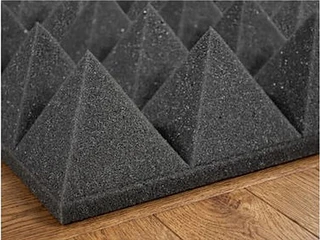
                  Acoustic pyramid foam panel
                  Relative Cost
                  $$$$
                  Expected Lifespan
                  5–10 yrs
                  DIY Workability
                  Knife or scissors; mount with spray adhesive
                  Fire rating to look for
                  Class A flame spread (ASTM E84)

                  Acoustic foam is open cell polyurethane cut into wedge, pyramid, or egg crate profiles that trap and dissipate sound waves. It absorbs mid and high frequencies, which kills echo and reverb inside a room and makes voices and recordings dramatically clearer.

                  Best Uses
                  • Recording, podcast, and streaming spaces
                  • Home theaters and media rooms
                  • Offices and conference rooms with echo problems
                  • Machinery and generator enclosures
                  How it feels

                  Light and soft with a slightly crumbly, open surface — the sculpted wedges squash easily under a fingertip and feel airy rather than dense. It is made to be looked at and heard, not sat on.

                  Acoustic pyramid foam panel
                  Q
                  Most Frequently Asked Question About This Foam

                  Does acoustic foam block sound?

                  No, and this is the most misunderstood point in home audio. Acoustic foam absorbs reflections inside a room, improving clarity and reducing echo, but it does almost nothing to stop sound traveling through walls. True soundproofing requires mass, air sealing, and decoupling, like added drywall layers and sealed gaps.

                  Open Cell Resin

                  Melamine Foam

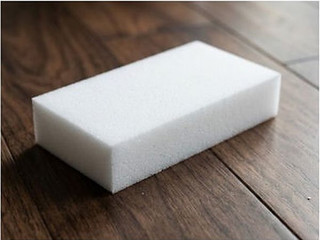
                  Melamine foam block
                  Relative Cost
                  $$$$
                  Expected Lifespan
                  3–5 yrs (acoustic)
                  DIY Workability
                  Cuts easily with knife or scissors; crumbly
                  Certifications to look for
                  Class A fire-rated

                  Melamine foam is an ultra-lightweight open cell foam made from melamine resin rather than polyurethane. It combines excellent sound absorption with a Class A fire rating, which is why it shows up in commercial acoustic panels and HVAC lining. Its other life is stranger: the micro-fine structure becomes abrasive when wet, which is the entire secret behind the Magic Eraser.

                  Best Uses
                  • Commercial and industrial acoustic panels
                  • HVAC and equipment sound lining
                  • High-temperature insulation
                  • Cleaning sponges
                  How it feels

                  Surprisingly light and dry, like a firm, extremely fine sponge. Dry, it feels soft; wet it and rub, and the surface turns faintly gritty and drags like ultra-fine sandpaper — the trick behind its cleaning power.

                  Melamine foam block
                  Q
                  Most Frequently Asked Question About This Foam

                  Is a Magic Eraser just melamine foam?

                  Yes. A Magic Eraser is plain melamine foam, and unbranded melamine sponges work the same way. The wet foam acts like extremely fine sandpaper that scrubs marks off at a microscopic level, which also means you should test it first on glossy paint, stainless, and delicate finishes.

                  Open Cell

                  Charcoal Packing Foam

                  Charcoal packing foam
                  Relative Cost
                  $$$$
                  Expected Lifespan
                  5–10 yrs
                  DIY Workability
                  Easy — carving knife for cavities; glues well
                  Certifications to look for
                  —

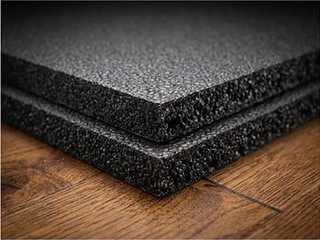
                  Charcoal packing foam is open cell polyurethane in the familiar dark gray color that lines equipment cases everywhere. It is soft enough to cradle gear, cuts cleanly for custom cavities, and pairs with a convoluted lid layer for all-around protection. The same foam, cut into large blocks, is what fills gymnastics and trampoline pits. FoamOrder sells both packing foam sheets and foam pit cubes.

                  Best Uses
                  • Camera, firearm, and instrument case inserts
                  • Tool and equipment kit organization
                  • Shipping protection for light and mid-weight items
                  • Trade show and demo kit boxes
                  • Gymnastics and trampoline foam pits
                  How it feels

                  Soft and cushiony with a fine, slightly velvety open surface — it gives gently when you press gear into it and cuts cleanly, cradling objects without hard spots. Lighter and airier than it looks.

                  Charcoal packing foam
                  Q
                  Most Frequently Asked Question About This Foam

                  What kind of foam should I use for a case insert?

                  Charcoal polyurethane is the right choice for most gear: cut cavities in a solid base layer and add a convoluted sheet in the lid. Step up to closed cell polyethylene for heavy items, sharp edges, or cases that see repeated hard impacts, since PE resists crushing far better.

                  Open Cell · Phenolic

                  Floral Foam

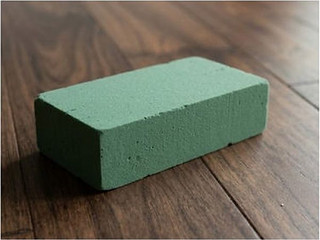
                  Green floral foam brick
                  Relative Cost
                  $$$$
                  Expected Lifespan
                  Single use
                  DIY Workability
                  Cut and shape with a knife; soak wet type; crumbles
                  Certifications to look for
                  —

                  Floral foam is a soft, crumbly phenolic-based foam designed to do one job: hold flower stems exactly where you place them. The wet type soaks up water like a sponge to keep fresh stems hydrated for days, while the dry type anchors silk and dried arrangements. It is a single-use material, and it crumbles rather than compresses.

                  Best Uses
                  • Fresh flower arrangements and centerpieces
                  • Silk and dried floral crafts
                  • Wreaths, arches, and event installations
                  How it feels

                  Soft, crumbly, and (when wet) cool and damp like dense cake — a stem pushes in with almost no resistance and stays exactly where you place it. It breaks apart rather than compressing and leaves a fine residue on your fingers.

                  Green floral foam brick
                  Q
                  Most Frequently Asked Question About This Foam

                  Is floral foam biodegradable?

                  Traditional floral foam is not. It is a phenolic plastic that breaks down into microplastic fragments, which is why many florists are shifting to reusable mechanics like chicken wire and pin frogs. Newer bio versions degrade only under specific composting conditions, so check the manufacturer's claims carefully.

                  04 — Construction & Industrial

                  Construction and Industrial Foam Types

                  These foams solve construction, insulation, and industrial problems rather than comfort ones. FoamOrder does not sell them, but if you are researching foam you will run into them constantly, and knowing the differences saves expensive mistakes at the hardware store.

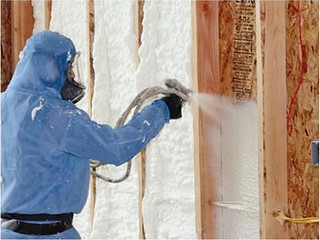
                  Spray polyurethane foam insulation being applied
                  Insulation

                  Spray Polyurethane Foam (SPF)

                  Spray foam is a two-part chemical mix that expands on contact to fill cavities and seal air leaks, then cures rigid in place. Open cell spray foam is lighter and cheaper at roughly R-3.5 to R-3.8 per inch with good sound absorption, while closed cell is dense and rigid at roughly R-6 to R-7 per inch, adds structural stiffness, and acts as a vapor retarder.

                  Common uses: attic and wall insulation, air sealing rim joists and penetrations, commercial roofing (closed cell), sound-dampening interior walls (open cell).

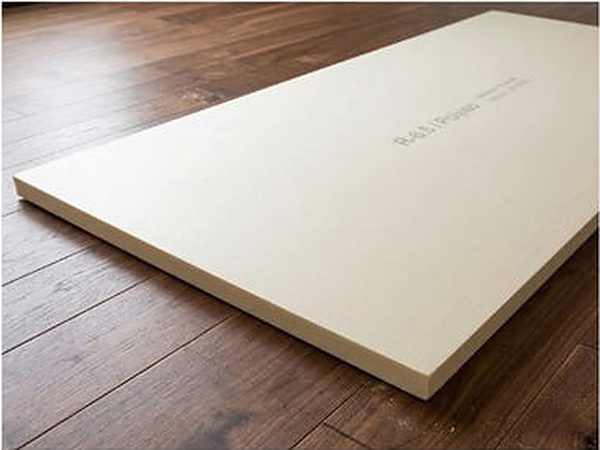
                  Polyiso rigid foam insulation board
                  Rigid Board

                  Rigid Polyurethane and Polyiso Board

                  Rigid polyurethane and its cousin polyisocyanurate (polyiso) come as foil-faced insulation boards with the highest R-value per inch of the common board foams, around R-6 or better. Polyiso dominates commercial flat roofing and continuous exterior wall insulation. One quirk: polyiso loses some R-value in very cold temperatures, which matters in northern climates.

                  Common uses: commercial roofing systems, continuous exterior wall sheathing, garage doors, refrigeration panels.

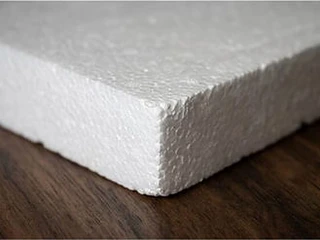
                  EPS expanded polystyrene foam board
                  Rigid Board

                  Expanded Polystyrene (EPS)

                  EPS is the white bead foam made by fusing small polystyrene beads in a mold, and it is the most affordable rigid foam per unit of insulation at roughly R-4 per inch. Beyond insulation board, molded EPS is everywhere: coolers, electronics packaging, bike helmets, and hobby-store craft balls. In civil engineering, giant EPS blocks called geofoam serve as lightweight structural fill under roads.

                  Common uses: insulation board and insulated concrete forms, protective packaging, coolers and food containers, craft shapes, geofoam fill.

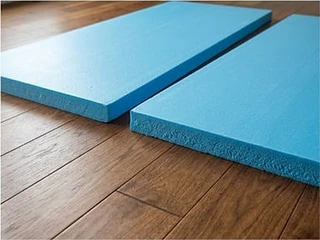
                  XPS extruded polystyrene foam board
                  Rigid Board

                  Extruded Polystyrene (XPS)

                  XPS is polystyrene melted and extruded into dense boards with a smooth closed cell structure, sold as the familiar blue, pink, or green panels at about R-5 per inch. Its density and moisture resistance make it the standard pick for below-grade and foundation insulation. It is also the crisp-cutting foam that architects and hobbyists carve for models and terrain.

                  Common uses: foundation and below-grade insulation, exterior sheathing, hot tub and cooler cores, architectural models.

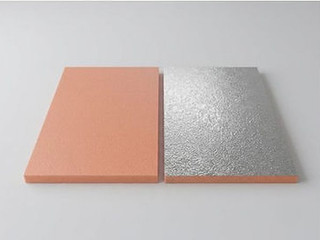
                  Phenolic foam insulation panels
                  Fire-Rated

                  Phenolic Foam

                  Phenolic foam is a rigid thermoset foam prized for outstanding fire performance: it chars rather than melts and produces very little smoke. That profile puts it in HVAC ductwork panels, building facades, and pipe insulation where fire codes are strict. It is also the parent chemistry of floral foam, which explains that material's crumbly texture.

                  Common uses: pre-insulated HVAC duct panels, facade and pipe insulation, fire-rated laboratory and marine applications.

                  EPP expanded polypropylene foam sheets
                  Bead Foam

                  Expanded Polypropylene (EPP)

                  EPP is a bead foam like EPS, but the beads are polypropylene, which makes the finished part resilient instead of brittle: it absorbs an impact, springs back, and can do it again. That energy management is why it fills car bumpers and seat cores, and why hobbyists build crash-tolerant RC aircraft from it. Its durability also makes it the standard for reusable shipping containers.

                  Common uses: automotive bumper cores and interior parts, reusable shipping dunnage and totes, RC model aircraft, protective gear liners.

                  PVC foam board
                  Closed Cell

                  PVC Foam Board

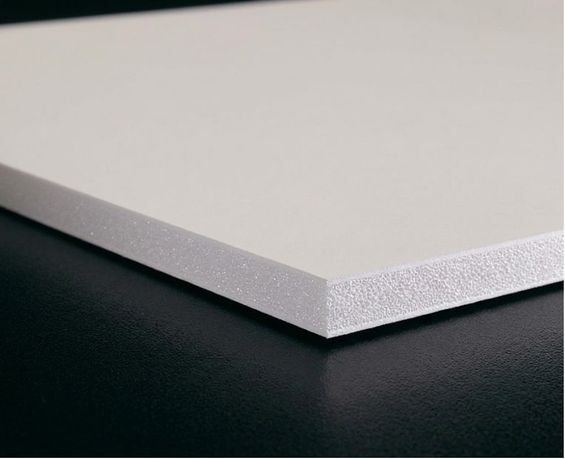
                  Closed cell PVC foam comes in two very different personalities. Lightweight sheet versions like Sintra are the rigid, printable boards used across the sign and display industry. High-density structural versions like Divinycell serve as core material inside fiberglass boat hulls, wind turbine blades, and other composite sandwich panels.

                  Common uses: signage and displays, exhibit fabrication, structural cores for marine and composite construction.

                  Quick Hits

                  Specialty and Exotic Foams

                  A few more foam types exist for narrow jobs, each tuned to one demanding environment:

                  • Silicone foam — extreme temperatures; high-end gaskets and medical padding.
                  • Microcellular urethanes (PORON) — cushion shoe insoles and seal electronics.
                  • Polyimide foam — insulates spacecraft and Navy ships.
                  • Foamed glass — non-combustible, waterproof insulation below grade.
                  • Cellular concrete — fills voids as lightweight structural material.
                  • Metal foams — absorb crash energy in aerospace hardware.

                  Different chemistries, same trick: trap gas in a solid, and the material gets lighter, softer, or more insulating than the solid alone.

                  05 — How Foam Is Made

                  The Chemistry Behind the Cushion

                  Nearly all foam is made by trapping gas inside a liquid polymer at the instant it turns solid. For polyurethane — the foam in most cushions and mattresses — that happens through a fast chemical reaction you can tune to produce almost any feel.

                  The core reaction

                  Polyurethane begins as two liquids: polyols (long-chain alcohols) and diisocyanates (usually TDI or MDI). Add catalysts and surfactants and they react within seconds, cross-linking into a solid polymer. Changing the polyol, the isocyanate, and the additives is how makers move a foam from soft and flexible to hard and rigid.

                  Blowing agents & cell structure

                  At the same moment, a blowing agent forms the bubbles. Water is the common one: it reacts with the isocyanate to release CO₂ that foams the mix as it cures. Whether those bubble walls burst or stay sealed decides everything — open-cell foam keeps an interconnected, breathable network that compresses and rebounds, while closed-cell foam traps gas in sealed pockets for stiffness, buoyancy, and insulation.

                  Not all foam is polyurethane

                  Latex is whipped rubber-tree sap that is then vulcanized; polyethylene and EVA are melted thermoplastics expanded with gas; and EPS and EPP are pre-expanded plastic beads fused together with steam. Same trick — gas trapped in a solid — with different chemistry.

                  06 — Advanced Specs Glossary

                  Foam Specs & Testing Standards

                  Commercial buyers and engineers work from measured, repeatable standards. Most flexible-foam properties are tested under ASTM D3574, the standard test methods for flexible cellular urethane; rigid and closed-cell insulation carries its own thermal and fire standards. Here is what each term means and how it is measured.

                  Density
                  ASTM D3574 · Test A

                  Mass of foam per cubic foot (lb/ft³). The primary predictor of durability and shape retention, and independent of how firm the foam feels.

                  Indentation Force Deflection (IFD / ILD)
                  ASTM D3574 · Test B1

                  Pounds of force for a 50 in² plate to compress a 4-inch sample 25 percent of its thickness. The standard measure of firmness.

                  Support Factor (Compression Modulus)
                  Derived · 65% ÷ 25% IFD

                  The 65 percent IFD divided by the 25 percent IFD. A higher ratio means a surface that gives softly but still resists bottoming out — a hallmark of quality seating foam.

                  Compression Set
                  ASTM D3574 · Test D

                  The permanent thickness a foam loses after being held compressed under heat, then released. Lower percentages mean better long-term recovery and less flattening.

                  Tensile Strength & Elongation
                  ASTM D3574 · Test E

                  How hard you can pull foam apart and how far it stretches first. Indicates resistance to tearing during handling, fabrication, and daily use.

                  Tear Resistance
                  ASTM D3574 · Test F

                  The force required to propagate a tear once one has started. Important for foam that is cut into shapes, sewn into covers, or repeatedly flexed.

                  Resilience (Ball Rebound)
                  ASTM D3574 · Test H

                  The percentage of height a dropped steel ball bounces back. Higher resilience feels springy and responsive; very low resilience is the slow, dead feel of memory foam.

                  Airflow / Porosity
                  ASTM D3574 · Test G

                  How freely air passes through the foam. It relates to breathability and cooling, and in reticulated dry-fast foam it is what lets water drain straight through.

                  Thermal Resistance (R-Value)
                  ASTM C518 / C177

                  Resistance to heat flow per inch of thickness. The headline spec for rigid and closed-cell insulation foams rather than comfort foams.

                  Flammability
                  Cal TB 117-2013 · ASTM E84 · FAR 25.853

                  Smolder resistance, flame-spread class, and aviation burn ratings required for residential upholstery, public buildings, and aircraft interiors respectively.

                  07 — Sustainability & the Future of Foam

                  Where Foam Is Headed

                  Most foam is a petroleum product, and the industry is under real pressure to lower its footprint. A few shifts are already changing what shows up on spec sheets.

                  Bio-based polyols

                  Soy and other plant-based polyols now replace part of the petroleum polyol in many polyurethane foams, trimming fossil inputs while performing much the same on the couch or bed.

                  Lower VOCs & certification

                  Programs like CertiPUR-US verify foam is made without certain chemicals and meets low-VOC limits for indoor air — meaningful for anything you sleep or sit on every day.

                  Recyclability

                  EPS is recyclable where facilities accept it, and flexible polyurethane scrap gets a second life as rebond foam for carpet pad and mats. Closed-cell and thermoset foams remain much harder to recycle.

                  Renewable & organic

                  Natural latex from rubber trees (GOLS organic) and plant-fiber fills offer genuinely renewable alternatives for buyers who put low impact first.

                  The most underrated green move

                  The greenest foam is often the one you never replace. A dense HR or latex cushion that lasts 15 years beats cycling through cheap foam three or four times — durability is sustainability.

                  08 — Foam Myths vs. Facts

                  Myths vs. Facts

                  Foam is surrounded by half-truths. Here are the ones we correct most often.

                  Myth

                  High density means high firmness.

                  Fact

                  Density measures how much material is in the foam, which predicts durability. Firmness (ILD) is a separate rating — a high-density foam can be built soft, medium, or firm.

                  Myth

                  All memory foam sleeps hot.

                  Fact

                  Traditional memory foam can trap heat, but gel infusions, open-cell structures, and ventilated covers make many modern versions sleep neutral to cool.

                  Myth

                  Acoustic foam soundproofs a room.

                  Fact

                  It absorbs reflections and echo inside a room but barely stops sound passing through walls. True soundproofing needs mass, sealing, and decoupling.

                  Myth

                  Styrofoam is the white foam in coolers.

                  Fact

                  Styrofoam is a trademark for blue XPS insulation board. The white bead foam in coolers and cups is EPS — a different material that performs differently.

                  Myth

                  Memory foam is the best foam for seat cushions.

                  Fact

                  On its own it bottoms out under sustained sitting weight and softens with body heat. It works best as a thin comfort layer over a firm HR foam base.

                  Myth

                  Foam cushions can't go outside.

                  Fact

                  That's true of traditional indoor polyurethane cushions, which soak up water and stay damp — but not of outdoor cushions. Reticulated dry-fast foam is built for it: water drains straight through the open structure and the cushion air-dries in hours, so mold never gets a foothold.

                  09 — Common Questions

                  Common Questions About Construction and Industrial Foams

                  Q
                  Common Question

                  Is Styrofoam the same as the white foam in coolers?

                  Technically no. Styrofoam is a trademark for blue extruded polystyrene (XPS) insulation board. The white bead foam in coolers, cups, and packaging is expanded polystyrene (EPS). The mix-up is so universal that even hardware store staff use the words interchangeably, but the two materials perform differently.

                  Q
                  Common Question

                  Which is better, open cell or closed cell spray foam?

                  It depends on the job and budget. Closed cell delivers roughly double the R-value per inch, blocks moisture vapor, and stiffens the structure, but costs significantly more. Open cell is cheaper, absorbs sound well, and flexes with the building, but needs more depth and separate vapor management in cold climates.

                  Q
                  Common Question

                  Can I install spray foam myself?

                  Small two-part DIY kits work fine for rim joists, gaps, and small projects. Whole-house or full-attic jobs belong with professionals: the chemistry must be mixed and applied at the right temperatures, and curing foam off-gasses, so the space needs proper ventilation and protective equipment during application.

                  Q
                  Common Question

                  What is the difference between EPS, XPS, and polyiso insulation?

                  Think of them as good, better, best on R-value per inch: EPS around R-4, XPS around R-5, and polyiso at R-6 or higher, with price rising in the same order. XPS handles ground contact and moisture best, while polyiso performs best in warm conditions and loses some efficiency in deep cold.

                  10 — Choosing the Right Foam

                  Choosing the Right Foam

                  The fastest way to narrow the field: decide whether the foam needs to cushion a person, protect an object, survive water, or manage sound, then match the cell structure and density to that job. If you are working on a cushion, mattress, or padding project, FoamOrder cuts every foam type we carry to your exact dimensions, and our customer service team has more than 100 years of combined foam experience to help you choose.

                  Start a Custom Cushion Shop Foam by the Sheet
                  Mike Handelsman, Owner & President of FoamOrder
                  Written By
                  Mike Handelsman
                  Owner & President, FoamOrder

                  Mike leads the family of foam and upholstery brands behind FoamOrder.com and Upholster.com, which have served consumer and commercial customers for over 20 years. A graduate of Duke University and Harvard Business School, he works directly on helping customers get the exact foam and cushions they need.

                  Products

                  Replacement + Custom CushionsFoamOrganicFabrics & CoversBedding AccessoriesMattresses
                  NeopreneCommercialDIYClearanceUpholstery Supplies

                  Resources

                  Order StatusContact UsWarrantyShipping InfoReturn & Cancelation PolicyPrivacy PolicyThe Foam Store of MarinDesigner/Trade Program
                  Foam Learning CenterWholesaleAbout FoamOrderProduct Certifications & Safety Data SheetsFoam and Your HealthCustomer ReviewsFoam Glossary

                  © 2026 FoamOrder

                  • Pinterest
                  • Facebook
                  • Instagram
                  • YouTube