
| Millimeters: | Inches (fraction): | Inches (decimal): |
|---|---|---|
0.5 mm | 1/32" | 0.03" |
1.5 mm | 1/16" | 0.063" |
2 mm | 3/32" (just less than 1/8") | 0.094" |
3 mm | 1/8" | 0.125" |
4 mm | 11/64" (slightly more than 1/8") | 0.17" |
5 mm | 13/64" (just less than ¼") | 0.20" |
6 mm | ¼" | 0.25" |













Over 1,000 5-Star Review
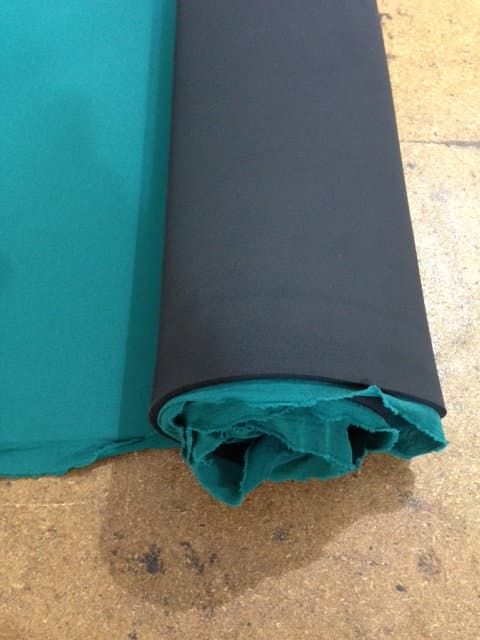
FoamOrder.com offers a full range of neoprene colors, thicknesses and types for a wide variety of uses as well as all the neoprene accessories you might need. This synthetic rubber is a durable material found in many everyday and specialty products. Our non-toxic neoprene sheeting can be used for gaming tables, poker tables, commercial applications, shoe soles, exercise equipment, rehabilitation braces and much more. Since neoprene is waterproof and has good insulation, it’s commonly used to make wetsuits and cable jackets or as a liner beneath roofing.
Check out our Clearance Section for 1/2 sheets of Neoprene in limited color options.
Neoprene refers to a group of synthetic rubbers that resist water, heat, oil and chemicals. The process involves the polymerization of chloroprene. Neoprene is often used as a fabric for boots, wetsuits and other outfits that need to repel water or provide good insulation.
Our neoprene rubber comes in a variety of textures and sizes and can be customized with a wide range of fabrics and colors. Our neoprene feels like a wetsuit or neoprene knee brace. The durometer/hardness of our neoprene is 4–8 on Type/Shore C. Note that a 4–8 on Type C corresponds to about 15–25 on Type A. Neoprene has a medium tensile strength, meaning it is moderately stretchy and therefore occasionally vulnerable to rips. To prevent tears, order neoprene with nylon fabric on one or both sides of the rubber.
You can order neoprene sheets in the following configurations:
Nylon fabrics tend to fade in sunlight while polyester fabric doesn’t. Nylon is suitable for silk-screen printing. Since the designs will be on top of the fabric surface, any color of fabric will work well for this kind of printing. Nylon fabric has a stretch of longitude 95.56% and latitude 244.75%.
Polyester-covered neoprene will generally hold up better in direct sunlight than nylon will. Print on polyester if you wish to use an “inkjet” or dye-sublimation printing process that sprays ink into the fabric. A polyester fabric surface will hold the image much better and more clearly than nylon. Since the color of the fabric will influence the color of the ink used, we recommend using a white polyester fabric to make sure the final colors are true to what you need.
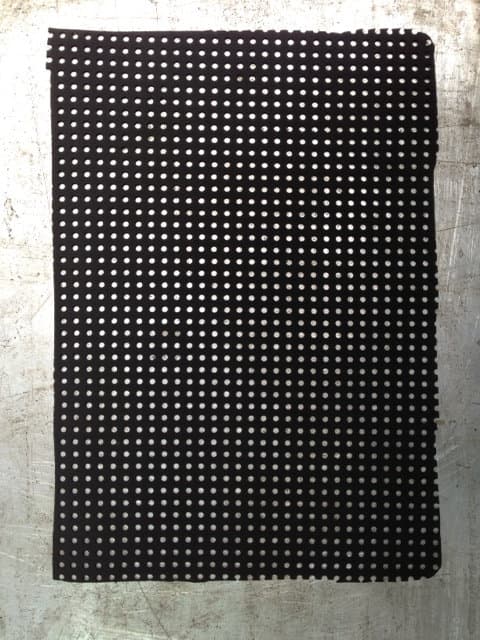
Perforated neoprene is ideal for medical braces and other body applications that call for breathable material. Only the rubber itself is perforated. The nylon or polyester fabric you choose is not perforated.
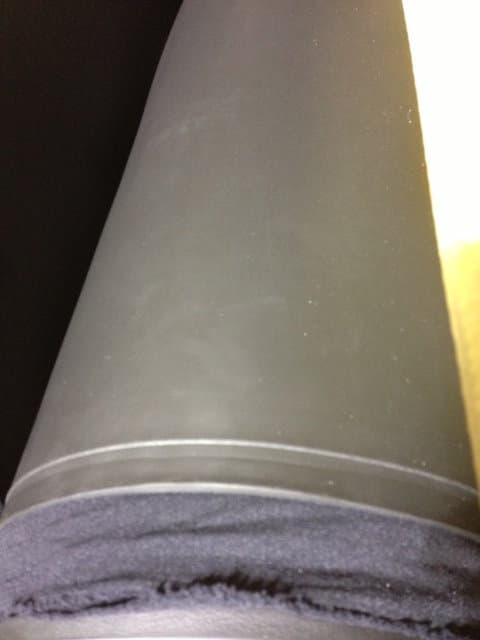
There is no fabric or texture in the neoprene rubber on the “plain” side—just raw rubber. White neoprene rubber may yellow over time even with fabric over it.
This neoprene has a surface texture much smoother than plain neoprene. It’s commonly used in clothing and wetsuits.
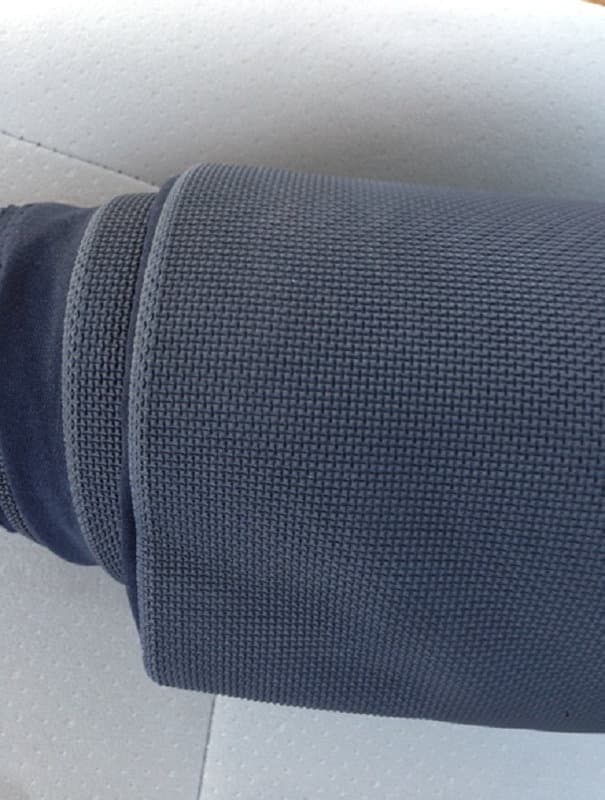
Textured neoprene has a rougher surface on the plain rubber side, allowing it to maintain better contact with the surface that it is placed upon.
This neoprene has a fuzzy loop fabric applied that is perfect for the hook side of Velcro® to bond with. U-loop should be used in hook-and-loop applications that are not separated frequently since U-loop will wear out. It increases airflow for close-to-skin applications when facing skin.
A higher quality version of the U-loop neoprene. It stands for UnBreakable Loop. UBL should be used when Velcro will be frequently applied and removed. It is textured on one side.
This is an adhesive backing applied to neoprene. Simply peel away the paper to expose the adhesive for application.
Neoprene should not be in the sun all day because heavy exposure will lead to cracking and fading. If you need a material that can withstand sunlight, we recommend applying UV protectant or using EVA closed-cell foam, which is naturally UV-resistant.
If you’re adding fabric to either or both sides of your neoprene sheet, make sure you know how much thickness the cover will add. Our thicknesses listed are for raw neoprene, so consider ordering one size thinner than you’ll need if you plan to add a layer of nylon or polyester.
Note that when we reference the thickness of neoprene, we are only counting the thickness of the neoprene rubber itself and not the additional thickness of backings like nylon, U-loop and UBL.
Upholstery Foam
Natural/Organic Foam
Packing Foam
Cushions
Mattresses
Over 100,000 Satisfied Residential and Commercial Customers, including:
What Our Customers Are Saying About FoamOrder