
Topics





By FoamOrder | February 9, 2021 | 8 Minute Read
Home / Foam Utility / Is Polyurethane Foam Toxic? Benefits of Going Organic With Couch Cushions and Mattresses
Shop Now
Most of us spend around a third of our time in bed. Some of us spend more time on the sofa streaming entertainment than we care to admit. Then there are home office chairs, patio chairs, poolside loungers and other furniture where you work or unwind.
In other words, we spend a considerable chunk of our lives on our furniture. Is that safe? That depends on the furniture. Unless you’ve already opted for eco-friendly furniture that promotes good health, your sofa and mattress are most likely filled with polyurethane foam.
At FoamOrder.com, our team often gets the question: is polyurethane foam toxic? After all, if you’re constantly sitting or lying on a certain material, you don’t want to be worrying about health and safety issues the whole time. Our experts have examined this topic and whether it’s safe to use a polyurethane foam mattress or sofa.
Polyurethanes were invented in 1937 by the German chemical company IG Farben. While originally created as a substitute for rubber, these versatile plastics have a wide range of uses. This is because the process can result in various chemical structures for creating foams, varnishes and other materials.
Since World War II, polyurethanes have found their way into everything from adhesives and shoe soles to airplanes and wood floors — and even to padded bras. Furniture manufacturers are crazy about polyurethane foam. Even coil spring mattresses are typically padded with it.
Polyurethanes are elastic polymers that start their life as liquids. In their natural state, they are biochemically inert and don’t cause problems. Transforming them into foam, however, introduces blowing agents and other additives. The chemical reaction may produce toxic gases and residue. Are these emitted in homes over time?
No one argues that polyurethane foam is flexible, comfortable, and highly durable. Even so, with decades of use now behind us, health and environmental concerns have been raised. Behind them is the question of whether polyurethane is toxic to humans.
Actually, there are several problems. For one, polyurethane foam derives from petroleum, which is not sustainable. It is therefore not environmentally friendly.
But that’s the least of your worries. This foam can release volatile organic compounds, or VOCs, that have been linked to a host of health problems. According to The New York Times, both the Occupational Safety and Health Administration and the Environmental Protection Agency have looked into the dangers.
The two worst offenders in the production of polyurethane are quite a mouthful: toluene diisocyanate, or TDI, and methylene diphenyl diisocyanate, or MDI. You’re not likely to be exposed to these chemicals in your home as they are inert in the final foam product. That being said, “off-gassing” can occur where leftover compounds are released into the air; this is a possible concern if you have pre-existing respiratory sensitivities.
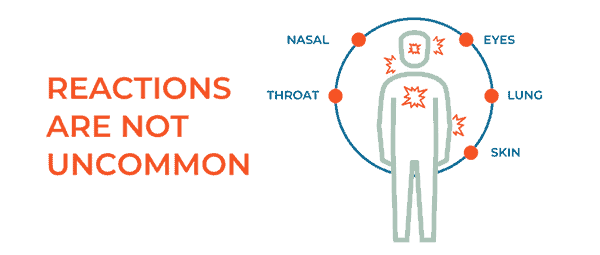
The bigger concern is for workers and the communities in which polyurethane is manufactured, which are warned of the health risks. TDI has been identified as a carcinogen. MDI irritates the lungs, throat, eyes, nasal passages, and skin. Allergic reactions are not uncommon. Some workers experience asthma, decreased lung function and other respiratory problems when exposed to even low concentrations of TDI and MDI.
Polyurethane foam is extremely flammable. That’s why chemical flame retardants pose the biggest threat in homes. Journalist Wyatt Andrews of CBS reported in 2008 that hundreds of millions of pounds of these toxic chemicals have been accumulating in American sofas and mattresses for more than three decades. Since we tend to keep furniture items for years, these chemicals inevitably find their way into our bodies.
Testing on exposed animals has produced grim results that don’t bode well for humans. Traces found in human breast milk are especially worrisome. Presumably, flame retardants can be transferred to infants that way.
Polybrominated diphenyl ethers, or PBDEs, were once the main ingredients in flame retardants. After mounting evidence that PBDEs thrive in the environment and embed themselves in organisms, they were discontinued in the U.S. in 2004. The EPA reported that long-term exposure to these toxic chemicals could result in liver, thyroid or neurodevelopmental damage. PBDEs were also shown to affect brain development and the reproductive system.
Alternatives were found, but they’re not much better. One compound, known as chlorinated tris or TDCPP, was voluntarily removed from kids’ pajamas around 40 years ago. In 2012, the peer-reviewed journal Environmental Science & Technology published its findings on TDCPP. According to scientists who conducted studies of foam in couches, there are plenty of reasons for concern. The consumer advocacy group Toxic-Free Future has chimed in as well:
Here’s how exposure occurs:
Not surprisingly, toddlers are at heightened risk. They love bouncing on sofas and beds, rolling around on the floor, and putting everything in sight into their mouths. If that’s not enough to persuade parents to go organic, we don’t know what is.
TDCPP isn’t the only culprit. Since PBDEs were phased out, it’s been a musical chairs game of flame retardants. A scientific study of 102 couches found that more than 40% bought between 1985 and 2010 contained TDCCP. Another 85% contained other flame retardants, many of them untested. In all, close to 40 different compounds were discovered. The irony is that the U.S. Consumer Safety Commission has found that flame retardants in couches and mattresses do little to protect people in a fire.
Get monthly updates on
promotions, deals, and
new products.
Finally, organic products are infinitely better for the planet. Organic latex, wool and cotton are sustainable, renewable and biodegradable. You can own great-looking furniture and do your part to preserve the planet all at the same time.
Organic Latex
Organic latex is extracted from rubber trees that quickly heal and go on to produce sap for up to 30 years. Later, harvested trees are used to make furniture. Rubber plantations must meet strict federal standards.
Organic Wool
Wool farmers are highly respectful of their flocks. The sheep that provide organic wool graze freely and are shorn yearly in stress-free environments. Wool is never dipped into harsh chemicals that pose a threat to people and pollute the environment.
Organic Cotton
Non-organic cotton is one of the most eco-unfriendly crops on earth. It is severely chemically dependent, requiring around a fourth of all insecticides for all crops of any kind grown around the world.
Recommended For You

