Topics
Get an instant quote on a custom cushion.
Don’t see the shape you need? No problem. Just choose “Pattern Shape” to make your own pattern and send it to us to cut to your exact pattern specifications.

Topics
Don’t see the shape you need? No problem. Just choose “Pattern Shape” to make your own pattern and send it to us to cut to your exact pattern specifications.
The straight answer first, then the reasoning — so you can pick the right grade, firmness, and thickness with confidence.

I've owned and worked at FoamOrder for the last eight years, and in that time I've watched something like 120,000 cushions get cut, sewn, and shipped out our door. That's a lot of sofas brought back to life — and it means the question I hear most is one I've thought about a great deal: what foam should I put in my couch?
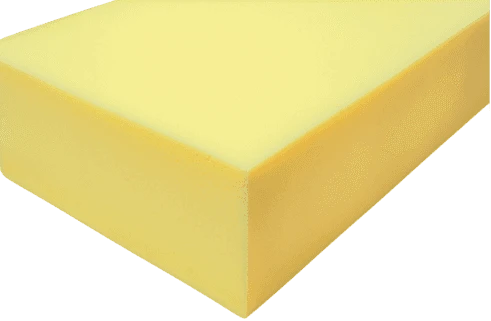
For most sofa & couch seat cushions, the best foam is a firm, high-resilience (HR) polyurethane at around 2.8 lb/ft³ density and 44 ILD — dense enough to last, firm enough to support, and resilient enough to spring back instead of flattening. It hits a balanced feel that suits most people: supportive without being hard, comfortable without going soft. At that grade, a quality HR foam holds its shape for 15–20 years.
And memory foam belongs on a sofa only as a thin topper — never as the whole seat.
Foam comes down to three specs worth understanding: how thick your cushion needs to be, how firm it should feel (ILD), and how long it should last (density). These aren't jargon to skim past — they're exactly what you're buying, and knowing what each one means is what lets you order the right cushion instead of guessing. Once you understand ILD, density, and the thickness you need, you're ready to order with confidence.
Thickness changes how firm a foam feels. A thin cushion needs a firmer grade so it doesn't bottom out, while a thicker one can go softer and still support you.
Heavier bodies compress foam more, so they need a firmer grade to feel properly supported. Matching the firmness to the main user is what makes a cushion feel right.
The denser the foam, the longer it resists sagging and holds its shape. Your longevity expectation sets the minimum density worth buying.
Once you understand these three — thickness, ILD, and density — you know exactly what you're getting, not just a vague grade name. That's what lets you order with confidence and get a cushion that fits, feels, and lasts the way you expect.
EverFlex — premium HR · the winnerOur premium tier, and what I recommend for nearly every sofa seat. A high-resilience foam with a springy cell structure, so it bounces back rather than slowly compressing into a permanent dent. The whole family sits at a supportive 2.6–2.9 lb/ft³, so you choose firmness without giving up longevity:
Pros: excellent durability, lively bounce-back, holds shape 15–20 yrs.
Cons: costs more up front — though usually cheaper per year of use.
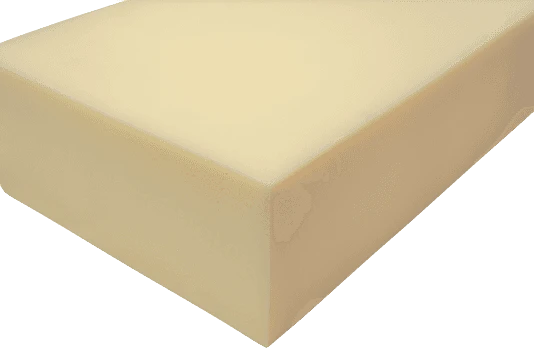
DuraFlex — mid-tier · support & valueOur balanced middle option at 2.2 lb/ft³, in soft (D30), medium (D40) and firm (D50). Honest, comfortable seating at a friendlier price.
Pros: good support, sensible value, durable enough for regular use.
Cons: won't match EverFlex's bounce-back or lifespan on a heavily used sofa.
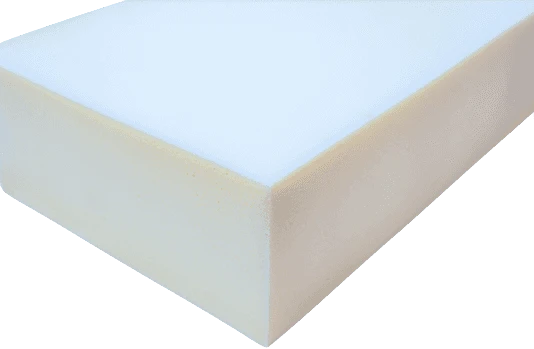
EconoFlex — value · occasional useOur value tier at 1.8 lb/ft³, in soft (C25), medium (C33) and extra-firm (C55). The right call for guest rooms, formal living rooms, and furniture that doesn't get daily wear.
Pros: budget-friendly, comfortable for lighter use.
Cons: lower density means a daily-use seat softens and sags sooner.
Terms like "HR foam," "HD36," "Lux," or "2540" are a mix of generic shorthand and other companies' brand names — and they aren't standardized seller to seller. What actually matters are the two numbers underneath any name: density and ILD. Match those and you can compare any foam to ours apples-to-apples.
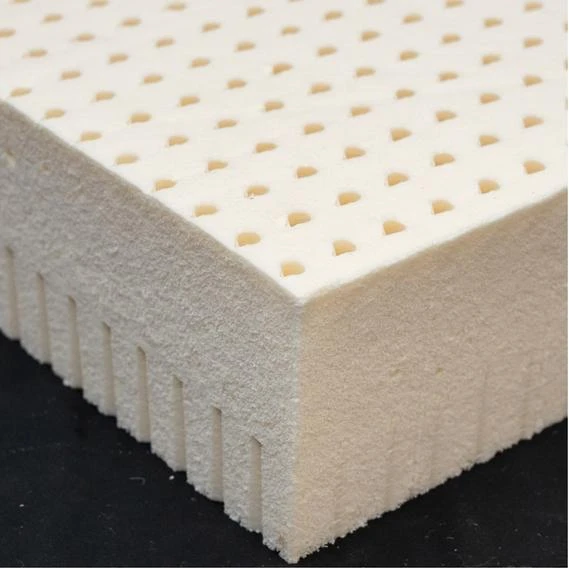
Organic latex — premium, durable, breathableOur GOLS-certified, all-natural choice. Made from rubber-tree sap, it's naturally springy, antimicrobial, biodegradable and far more breathable than poly, so it sits cooler. At ~5.9 lb/ft³ it's exceptionally durable — often 20+ years — in firmness levels N25 (softest) to N45, with N31 and N36 suiting most cushions.
Pros: outstanding lifespan, supportive bounce, breathable, all-natural.
Cons: heavier and pricier than poly (and worth noting for latex sensitivities).
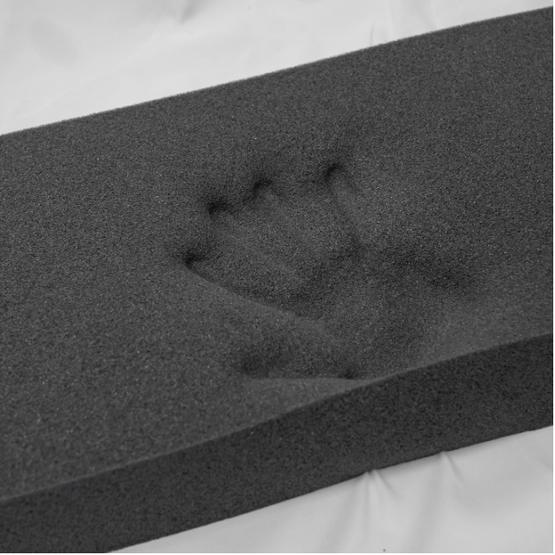
Memory foam — topper only, not a solid seatAs a thin topper over a firmer EverFlex base, it adds a lovely pressure-relieving feel. As the entire seat, it's a mistake. Our memory foam is a soft, slow-recovering viscoelastic (5.3 lb/ft³, ILD 13) — a full memory-foam seat tends to feel like you're sitting in a hole and can develop body impressions over time.
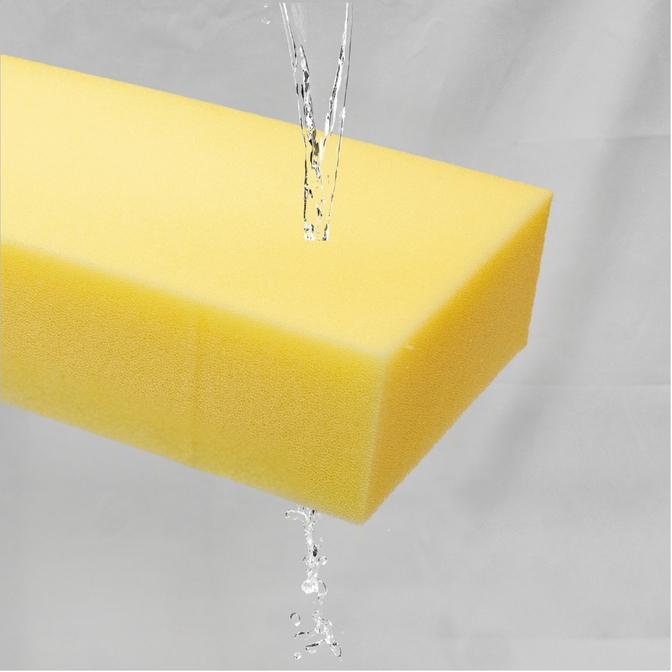
Outdoor — patios & exposed seatingAn open-cell, quick-draining grade (1.8 lb/ft³) built to let water pass straight through and air-dry fast, in soft (25), medium (33) and firm (45). Pair it with an outdoor fabric like Sunbrella.
Pros: drains and dries quickly.
Cons: not meant for indoor comfort seating, where EverFlex feels better.
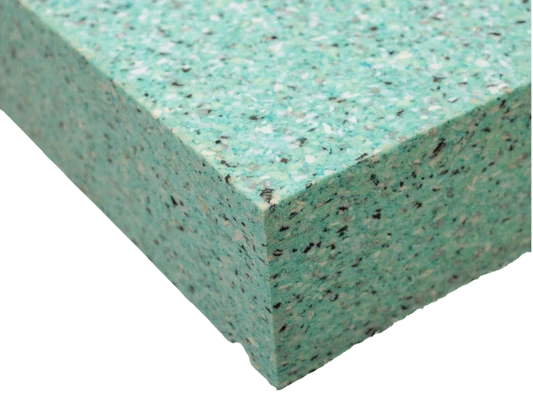
A dense, bonded foam (8.0 lb/ft³, ILD 90) made from compressed recycled scrap — best known as the springy carpet pad under wall-to-wall carpet. That density gives it very little give under body weight, exactly what you don't want in a seat. Useful as a structural base layer; don't let anyone sell you a rebond sofa cushion.
This is the single most useful idea in the whole guide. Density (lb/ft³) measures how much material is packed in — it predicts durability. ILD measures how firm it feels — it's about comfort. They're completely separate. Firmness tells you how the cushion feels on day one; density tells you whether it'll still feel that way in year five.
The takeaway: you need both numbers to be right. Want the deep dive? See our Foam Density & ILD explainer.
Your seat carries your full body weight on a small footprint, so it needs to be firmer and denser — that's where a ~44 ILD seat foam shines. Your back only leans against you. Put that same firm seat foam in the back and the sofa feels stiff and unwelcoming.
Matching firm seats to soft backs is the quiet secret behind sofas that feel genuinely comfortable rather than just supportive.
Not sure where you land? Take our "Which foam should I pick?" selector below — it walks you through it in under a minute, and you're always welcome to call our team.
Firmness isn't felt in a vacuum — the same foam reads differently depending on how thick the cushion is and how much you weigh. This matrix maps the real-world feel of every grade across sitter weight (down) and cushion thickness (across), for both seat and back cushions. Pick a foam and find your row.
Green means a great fit; red means the foam bottoms out or sinks too far. Toggle Seat vs Back at the top of the chart.
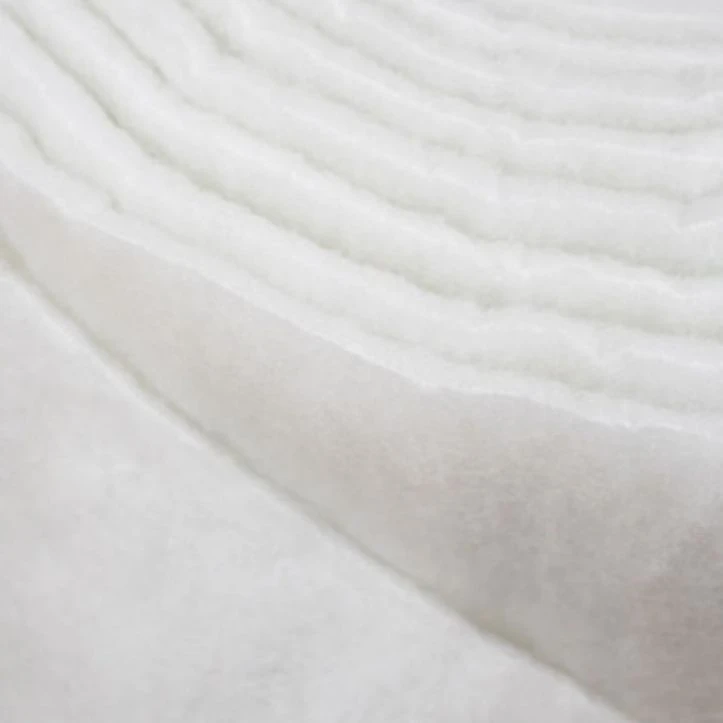
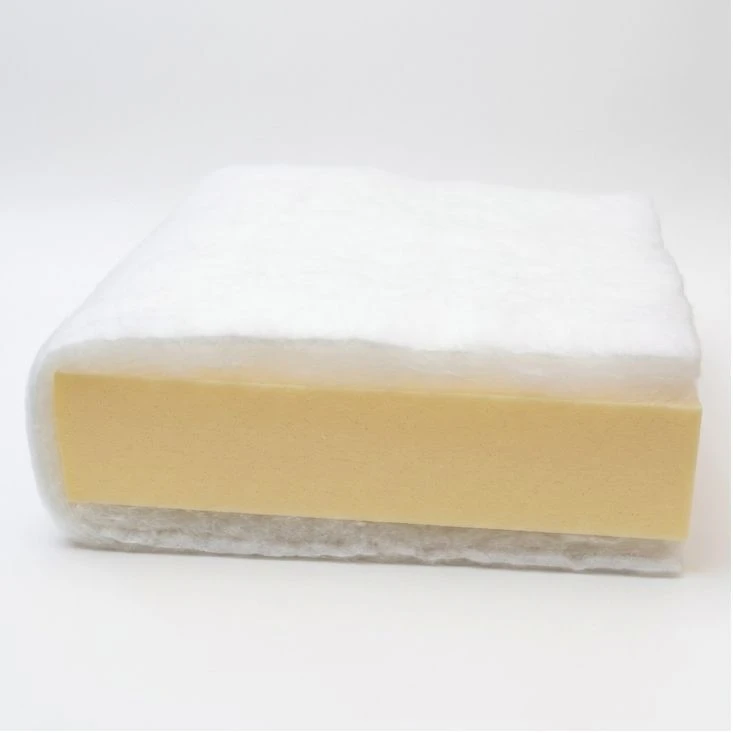
If you want a cushion that feels like it came out of a high-end furniture showroom, layering is the technique: a firm core for support, a thin soft top layer for a gentle surface, then a wrap of polyester batting (commonly sold under the brand name Dacron) to round the corners and crown the cushion.
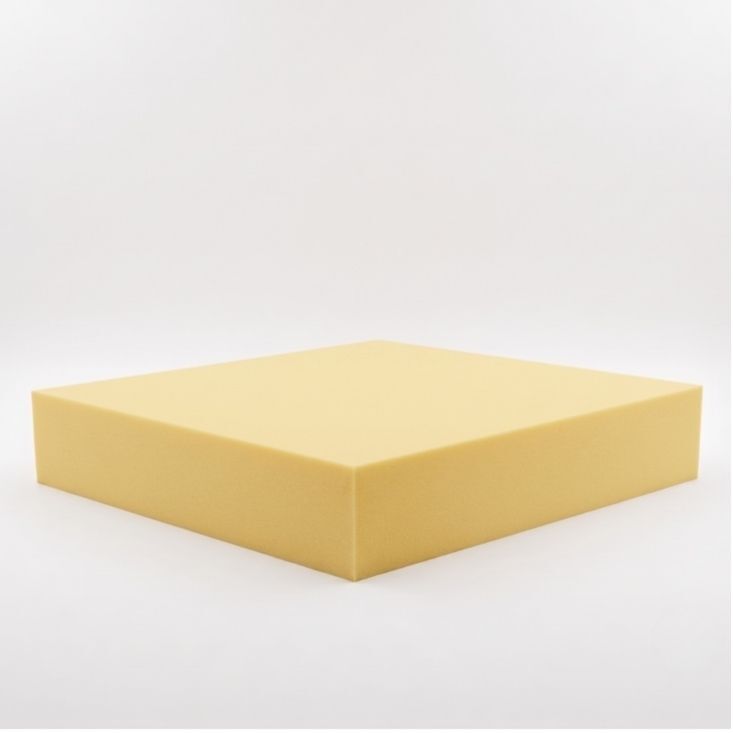
That wrap is the difference between a plump, crowned cushion and one that looks flat and overly geometric — with loose, under-filled fabric at the corners because there's nothing rounding it out. A small amount of extra material makes an outsized difference, which is why we recommend a polyester batting wrap on every cushion.

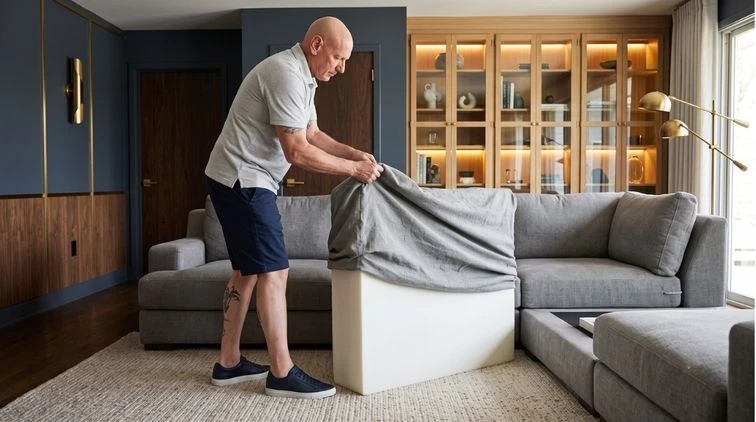
With most couch cushions, you're replacing the foam inside a cover you already own — so the cover, not you, decides the size. Your job isn't to pick a thickness; it's to match what the cover was built for. Sofa seat cushions are usually 4–6 inches thick, but the only measurement that matters is the one your own cover gives you.
The old foam has almost certainly shrunk and compressed, so measuring it gives you a cushion that's too small and sloppy. Measure the cover instead: unzip and remove it if you can, lay it flat, and measure seam to seam. If it won't come off, stretch the fabric out as far as it will go and measure seam to seam that way.
When in doubt, round up rather than down — it's better to give us a measurement that's a quarter-inch too big than too small. A snug fit is what keeps a couch cushion looking full and crisp rather than flat and wrinkled, so we'll cut to the dimensions you send us.
Step-by-step instructions, including how to handle T-cushions and rounded fronts, are in our how to measure your cushions guide. Prefer to watch? This short walkthrough covers it:
Couch cushions sit in the rooms where you spend the most time, so what the foam is made of matters as much as how it feels. Every foam we cut — except structural Rebond — is independently certified for content, emissions, and safety.
EverFlex, DuraFlex, EconoFlex, Outdoor, and Memory foam are all CertiPUR-US® certified — independently tested to be made without ozone depleters, PBDE flame retardants, mercury, lead and other heavy metals, formaldehyde, or regulated phthalates, and to meet low-VOC limits for indoor air quality.
Our natural latex is GOLS-certified organic (Global Organic Latex Standard) and eco-INSTITUT® certified — verified for organic content and tested for harmful substances and emissions. That's the all-natural choice for anyone who wants the most breathable, lowest-emission seat we make.
We cut every cushion to your exact measurements — 30+ standard shapes plus any custom shape from a pattern. Unsure about grade, firmness or measurements? Our team helps you get it right before anything is cut.
The proof is in the sit. These are real customers who measured a tired old sofa, sent us the numbers, and dropped fresh custom-cut foam into their own covers — no reupholstering, no new couch. Hear how the replacement went in their own words.
Scroll for more → · See hundreds more reviews, with photos, on our customer reviews page.
The best foam for couch cushions is high-resilience (HR) polyurethane foam. It is denser and springier than standard foam, so it supports your weight, resists sagging, and bounces back instead of flattening. For seat cushions, look for a density of at least 2.5 lb/ft³ and a firm feel; back cushions can use a softer grade. We cut this as our EverFlex line.
A foam density of 2.5 to 2.9 lb/ft³ is best for daily-use couch cushions, and 1.8 lb/ft³ is the practical minimum for seating. Density measures how much material is packed into the foam and predicts how long it lasts; firmness (ILD) is a separate number that measures how it feels. Higher density means the cushion holds its shape for more years.
Memory foam is good as a thin topper over a firmer foam core, where it adds pressure-relieving comfort, but it is not recommended as the entire couch cushion. Memory foam is soft and slow to recover (around ILD 13), so a full memory-foam seat tends to feel like you are sinking and can develop permanent body impressions over time.
Sofa seat cushion foam should be 4 to 6 inches thick, with 5 inches being the most popular all-around choice. Thicker foam (6 inches or more) gives a deeper, more luxurious seat; thinner foam (3 to 4 inches) suits benches, window seats, and firmer, more structured designs.
The best fix for sagging couch cushions is to replace the old foam with a firmer, higher-density high-resilience foam, ideally wrapped in polyester batting (Dacron) for a fuller look. Sagging almost always means the original foam was too low in density and has compressed; a denser HR foam restores the support and shape and lasts far longer.
Couch seat cushions should be firm, and back cushions should be soft. A firm, supportive seat carries your body weight and resists sagging, while a softer back is more comfortable to lean against. For a seat that is firm but still plush on top, use a firm foam core with a thin soft topper and a Dacron wrap.
Couch cushion foam lasts anywhere from 2 to 20-plus years depending on its density. Low-density value foam (about 1.8 lb/ft³) lasts 2 to 4 years, mid-grade foam (2.2 lb/ft³) lasts 5 to 10 years, high-resilience foam (2.6 to 2.9 lb/ft³) lasts 15 to 20 years, and organic latex lasts 20 years or more. Density is the single biggest driver of lifespan.
Furniture manufacturers use high-resilience polyurethane foam for sofa seats, typically 2.5 to 2.9 lb/ft³ with a firm ILD, usually finished with a soft topper and a polyester (Dacron) wrap, plus softer fills for the back cushions. This combination balances long-term support with a comfortable, plush surface.
Mike leads the family of foam and upholstery brands behind FoamOrder.com and Upholster.com, which have served consumer and commercial customers for over 20 years. A graduate of Duke University and Harvard Business School, he works directly on helping customers get the exact foam and cushions they need.