
Topics
By FoamOrder | December 23, 2020 | 4 Minute Read
Home / Foam Utility / FoamOrder’s Ultimate Guide to Sound Absorption With Egg Crate Foam
Shop Now ›
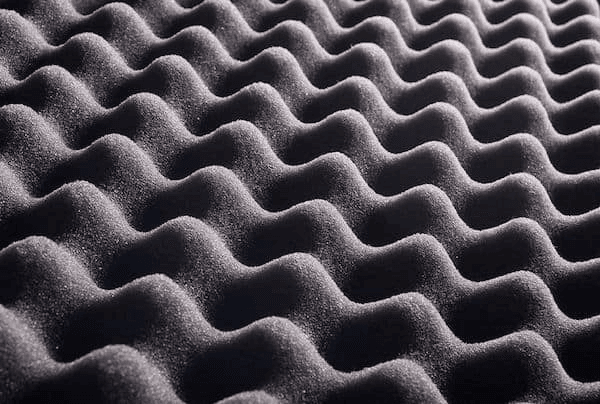
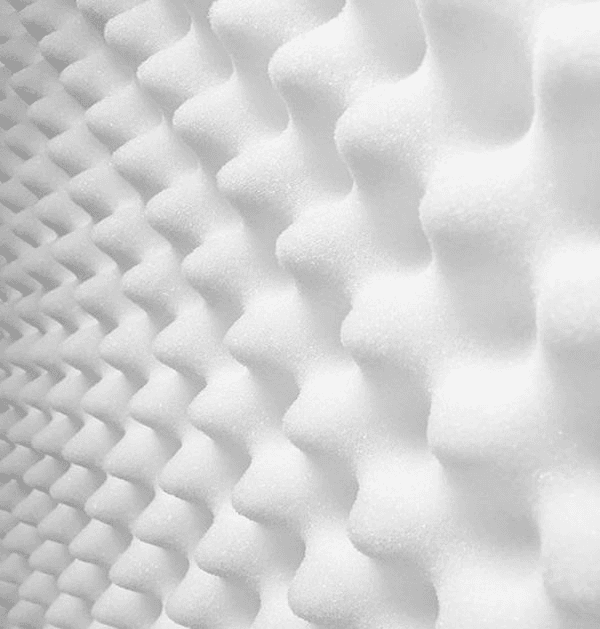
As the name suggests, egg crate foam has one side that features “dips and points” reminiscent of an egg crate. Also known as convoluted acoustic foam or soundproofing foam, this foam type is a popular and widely used sound absorption option for home and professional use.
Whether for music production, factories or “quiet areas,” egg carton foam offers many ways to improve acoustics and reduce ambient noise. FoamOrder.com has compiled this helpful guide to give you everything you need to know when choosing egg crate foam.
Sound waves travel roughly 343 meters per second through the air — that’s 750 miles per hour. This is an ideal situation where there are no obstacles to impede sound waves on their journey into our ears. As the sound wave travels and bounces into a variety of objects, including walls, the wave loses strength and the sound starts to dissipate. Therefore, sound absorption is defined by how much energy is removed from the sound wave as it passes through or encounters any given material.
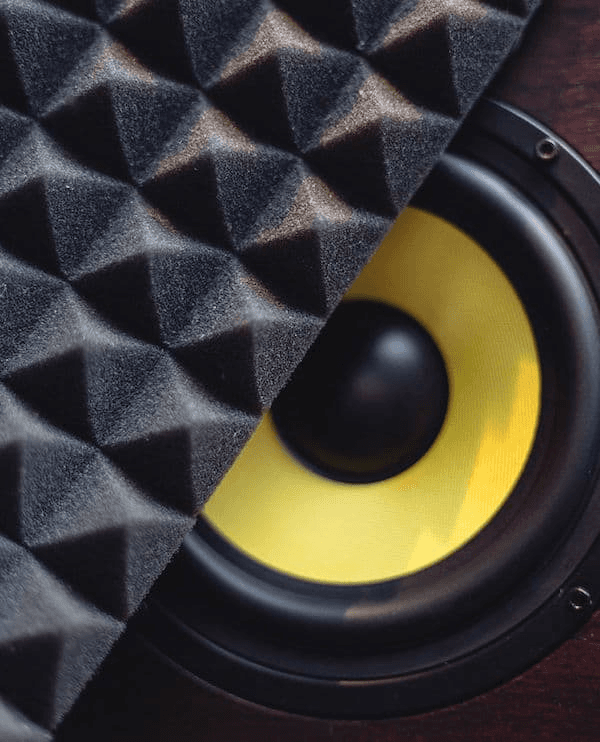
When the sound wave encounters a hard, nonporous surface, it rebounds and continues to reverberate around. A softer, porous surface such as egg crate foam allows the sound wave to flow into it. Due to the foam’s design, the wave is significantly deadened as it travels through. When the sound wave comes out of the porous surface, it is significantly slower — therefore, dampened and quieter.
When the overall goal is to reduce sound coming in or out of a room, there are different levels of sound diminishment to choose from depending on your needs.
Soundproofing completely prevents sounds from coming in or out of a room. To achieve this, the room or building is constructed with the intention of soundproofing it. Deadening materials form the foundation of the walls to truly make the room soundproof. A common misconception is that by adding egg crate foam panels to your walls after the fact, you can make a room soundproof. This is not the case. However, you can use foam egg crate soundproofing panels during initial construction.
Sound absorption can be achieved after a room or building is already constructed and is used to diminish the amount of sound that is heard inside or outside the room. By using acoustic foam panels such as egg crate foam, sound waves are partially absorbed and the room or area is quieter.
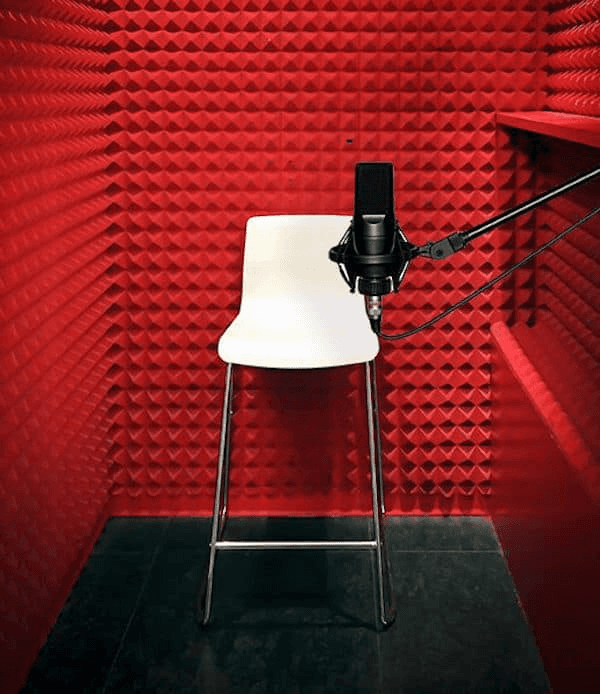
The unique concave/convex design of egg crate foam increases the surface area of the foam, making it better suited to absorb sound waves. It’s based on the shape of egg cartons — before the creation of the foam, many people used egg cartons in soundproof rooms to reduce noise and echo. In addition to dampening sound coming out or into the room, egg crate foam is excellent at improving the sound inside the room, which is excellent for recording studios or theater rooms. Egg crate foam is also a cheaper alternative to other options on the market.
There are other benefits to using egg crate foam, including:
Get monthly updates on
promotions, deals, and
new products.
To determine the effectiveness of acoustic foam, it is measured by the noise reduction coefficient (NRC), which represents the amount of sound energy that is absorbed when it strikes a particular surface. Perfect soundproofing has an NRC of 0, which means the surface reflects all sound. Perfect absorption has an NRC of 1, which means all sound is absorbed. The higher the number, the better the absorption is.
To calculate the NRC score, sound decibels are tested in a concrete room with and without foam panels. The change in octaves based on sound frequencies is measured across six frequency bands. These measurements are then averaged and rounded to the nearest multiple of 0.05.
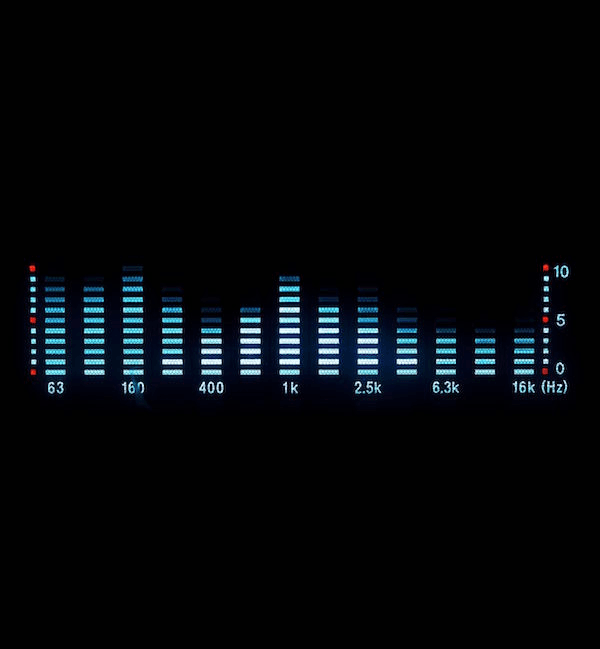
It should be noted that the higher the sound frequency, the better the foam is at absorbing it. This is important to remember when considering what sounds will be generated in your space.
To get the most benefit from egg crate sound foam, you must hang it correctly. When installing egg crate foam in your space, follow these methods for maximum sound absorption and protection against wall damage.
To begin, purchase an adhesive spray such as our Pro-Tack Foam Adhesive. Spray the smooth side of the foam in a back-and-forth motion to ensure the surface is properly covered. Note that if your foam already comes with an adhesive backing, you can skip this step.
Next, press the foam adhesive side down onto a piece of cardboard and hold it in place — with adequate pressure — for at least 30 seconds. Allow the foam to dry on the cardboard for 1-2 hours.
Once the glue is dry, trim off the excess cardboard without cutting the foam. Ensure that when you are looking at the foam panel from the egg crate side, no cardboard is visible.
Finally, add a removable adhesive such as command strips to the back of the cardboard and attach it to the wall.
There are many places that egg crate foam can be used, including:
When you’re looking for foam experts, FoamOrder.com is the place to go. Foam is what we do! We offer three choices of egg crate acoustic foam for all of your sound absorption needs:
For DIY projects, order an egg crate foam sheet to cut yourself. It’s easy and can be done with household scissors or a serrated knife. Or enter your dimensions and have our team do the cutting for you. FoamOrder.com can also create custom acoustic foam egg crate patterns — read our guide on how to create a panel template for the best results. If you need help or advice, get in touch with our highly experienced and dedicated foam professionals today to get started with egg crate foam sound absorption panels.
Recommended For You

